Introduction
Customer Lifetime Value (CLV) is one of the key e-commerce metrics focused on long-term customer value rather than one-time sales. The online retail market is oversaturated, competition for traffic is constantly growing, and customer acquisition costs are increasing. Focusing on CLV allows businesses to invest resources wisely, build stable revenue, and form a loyal audience.
Long-term relationships lead to higher margins, revenue predictability, and business model sustainability. A customer who regularly purchases, responds to personalized offers, and recommends the brand forms the foundation for e-commerce platform growth.
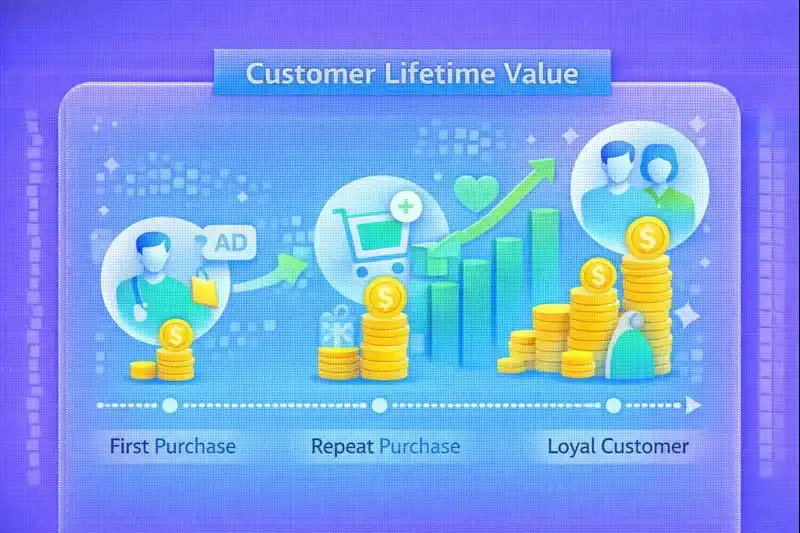
What is Customer Lifetime Value (CLV)
Customer Lifetime Value is the total financial value of a customer throughout their entire relationship with a brand. The metric shows how much revenue a business receives from one customer during their lifecycle.
CLV is used for:
- evaluating marketing channel effectiveness
- optimizing acquisition budget
- segmenting customer base
- making strategic product development decisions
For e-commerce managers, CLV is an indicator of customer experience quality, brand strength, and retention strategy effectiveness.
How to Calculate CLV: Formulas and Calculation Methods
Basic CLV Formula
CLV = (Average Order Value × Purchase Frequency × Customer Lifespan)
Example
- Average Order Value – $50
- Purchase Frequency – 4 purchases per year
- Customer Lifespan – 3 years
CLV = 50 × 4 × 3 = $600
Extended Formula with CAC
CLV = (Average Revenue per User × Customer Lifespan) - Customer Acquisition Cost
Example
- ARPU – $200 per year
- Customer Lifespan – 3 years
- CAC – $80
CLV = (200 × 3) - 80 = $520
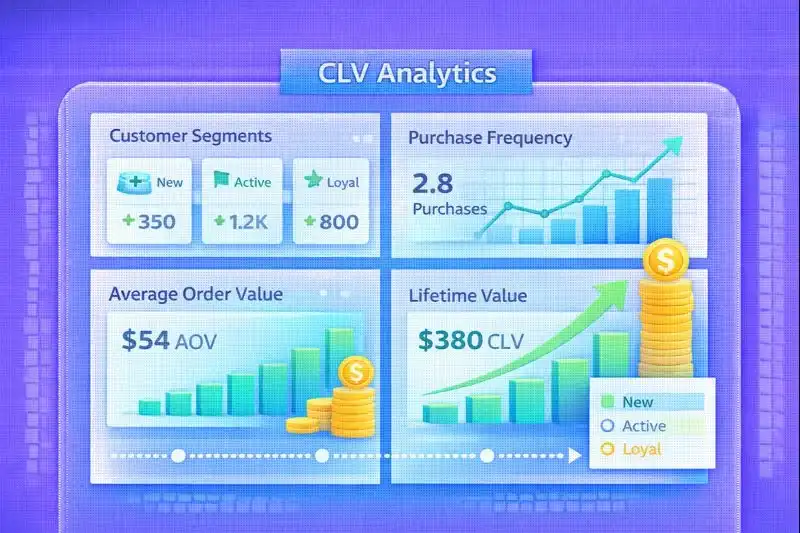
Historical CLV vs Predictive CLV
| CLV Type | Description | When to Use |
|---|---|---|
| Historical | Based on actual transactions | Analyzing past campaigns |
| Predictive | Uses behavioral models | Planning growth |
Predictive CLV leads to more accurate management decisions but requires quality data.
CLV for Different Business Models
| Model | Calculation Features |
|---|---|
| Subscriptions | Focus on retention, churn |
| One-time purchases | Repeat order frequency |
| B2B | Longer lifecycle, higher check size |
Key CLV Components and How to Improve Them
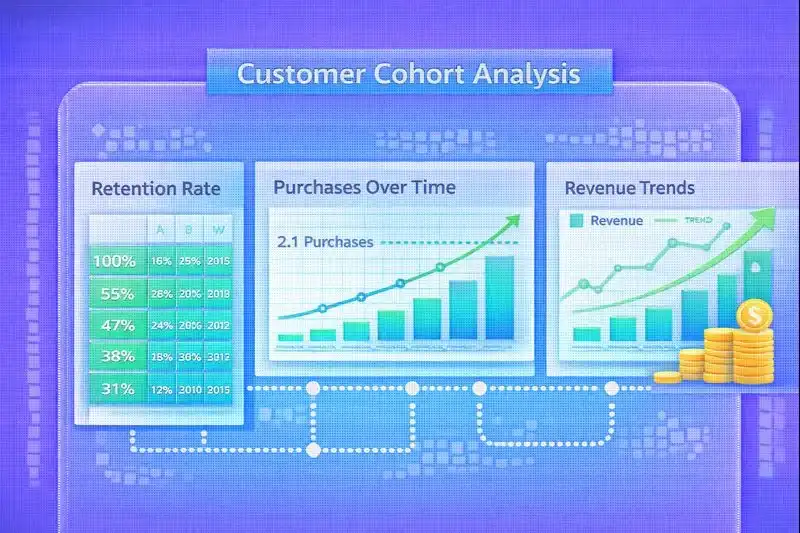
Average Order Value (AOV)
AOV is the average order amount. AOV growth directly increases CLV.
Optimization tools:
- product bundles
- minimum amount for free shipping
- complementary product recommendations
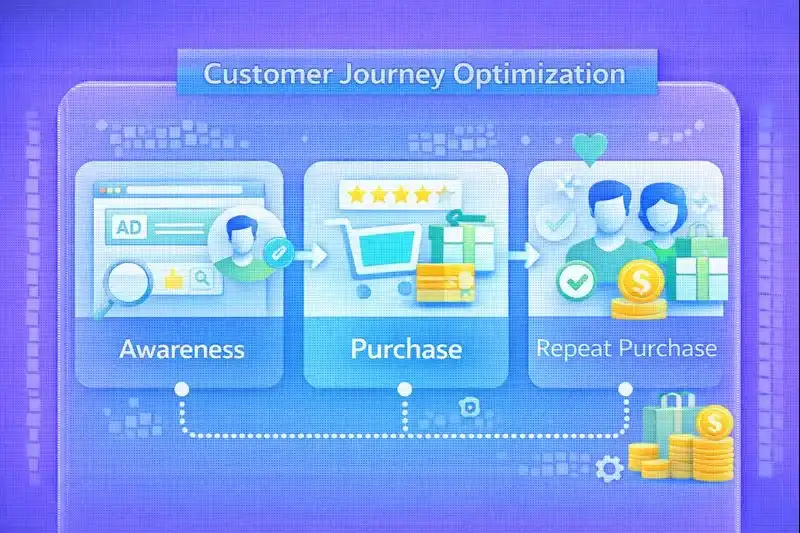
Purchase Frequency
Purchase Frequency is the number of purchases per period. The indicator depends on communication, assortment, and repeat order convenience.
Customer Lifespan
Customer Lifespan is the duration of active customer interaction with the brand. Retention strategies directly impact this parameter.
Retention Rate
Retention Rate = ((Customers at End - New Customers) / Customers at Start) × 100%
Example
- Customers at Start – 1,000
- Customers at End – 1,150
- New Customers – 300
Retention Rate = ((1,150 - 300) / 1,000) × 100% = 85%
Strategies to Increase CLV
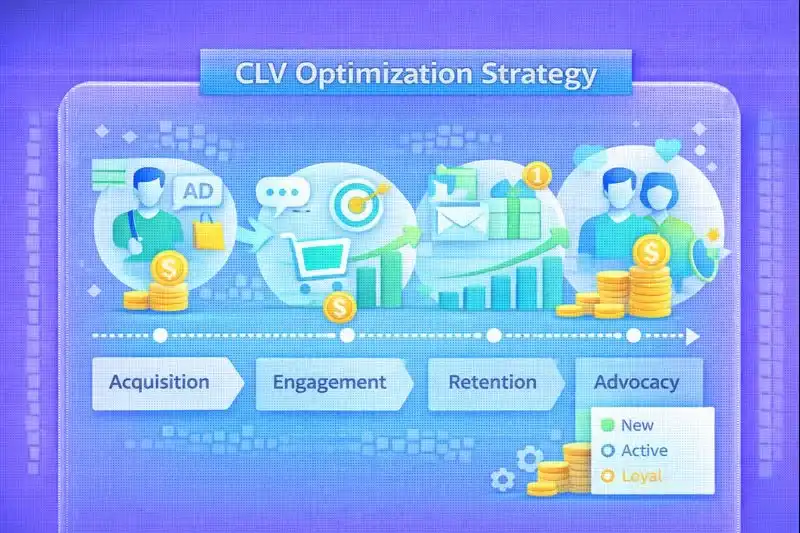
Improving New Customer Onboarding
The first days of interaction shape customer expectations. Quality onboarding leads to repeat purchases.
Successful onboarding elements:
- welcome email with instructions
- personalized product recommendations
- fast first order delivery
- proactive support
Loyalty Programs
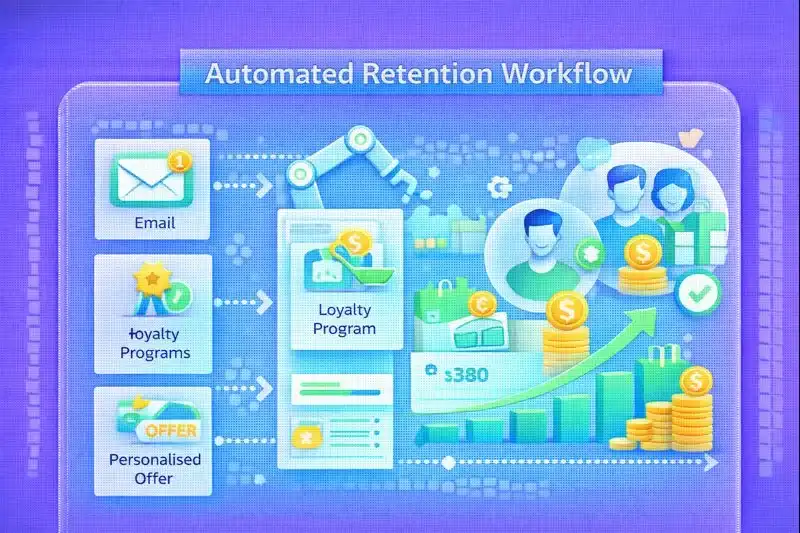
Points, statuses, and cashback stimulate regular activity.
Types of loyalty programs:
- Accumulation system – points for each purchase
- Tiered system – VIP statuses with privileges
- Cashback – percentage return from purchases
- Referral program – bonuses for inviting friends
Personalization and Segmentation
Personalized offers are based on behavior, purchase history, and CLV segment.
Key personalization directions:
- product recommendations
- individual discounts
- personalized email content
- adaptive landing pages
Cross-sell and Up-sell
Recommendations for complementary or premium products increase AOV without aggressive marketing.
Implementation techniques:
- "Frequently bought together"
- "You might also like"
- product comparisons
- limited offers on premium versions
Customer Service Quality
Fast support, transparent return conditions, and omnichannel communication build trust.
Critical elements:
- response time < 2 hours
- simple return process
- support availability across all channels
- proactive order status updates
Tools for Tracking and Analyzing CLV
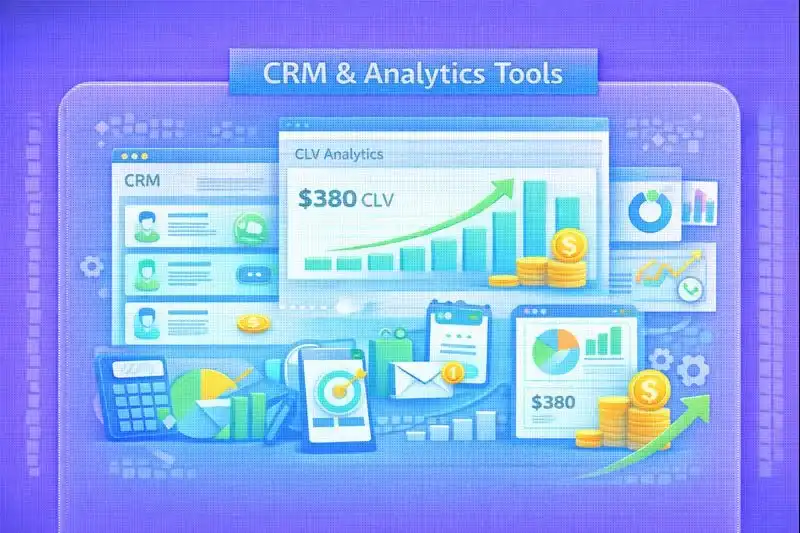
| Tool | Functionality | Suitable For |
|---|---|---|
| Google Analytics 4 | Behavioral cohorts, lifetime reports | Small/medium business |
| CRM (Salesforce) | Customer history, transactions | All business sizes |
| CDP (Segment) | Single data source | Medium/large business |
| BI Systems | CLV visualization, forecasting | Medium/large business |
| LetsCommerce | Built-in CLV analytics | E-commerce platform |
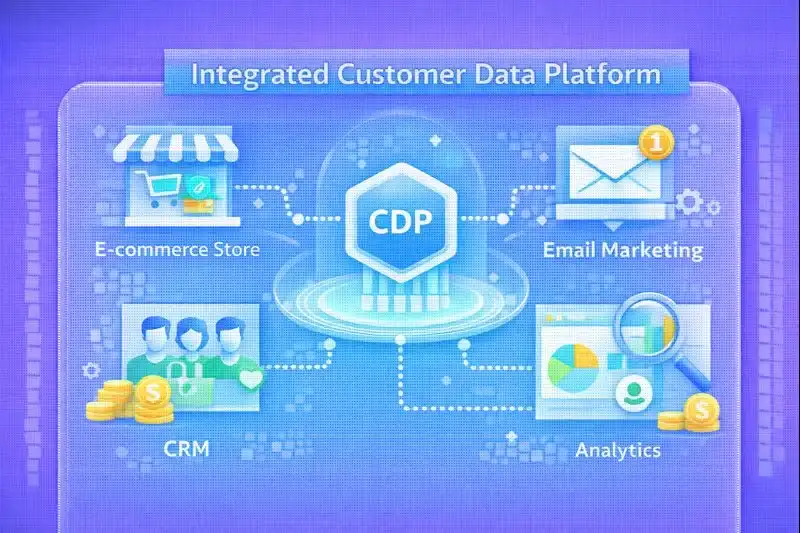
Critical tool requirements:
- integration with e-commerce platform
- customer segmentation
- automated reporting
- predictive models
Practical CLV Increase Case Studies
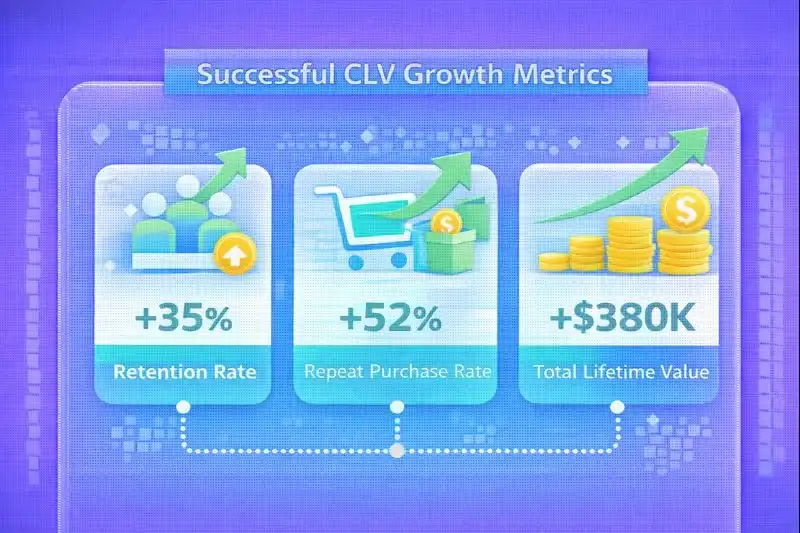
Case 1: Fashion E-commerce
Problem: low repeat purchase frequency (15% retention rate)
Solution:
- personalized email sequences based on purchase history
- multi-tier loyalty program
- styling consultations for VIP customers
Result: CLV +32% in 9 months, retention rate 38%
Case 2: Beauty & Cosmetics
Problem: high CAC, low ROMI
Solution:
- subscription program for regular products
- educational product content
- exclusive early access for top customers
Result: CLV +45%, CAC reduced by 22%
Case 3: Home & Garden
Problem: seasonal purchases, long cycles between orders
Solution:
- content strategy (seasonal guides)
- cross-sell complementary products
- product care reminders
Result: purchase frequency +2.3 times per year
Common Mistakes When Working with CLV
Mistake 1: Ignoring CAC
Calculating CLV without considering acquisition cost distorts actual segment profitability.
How to fix: always use the CLV - CAC formula to assess real profitability.
Mistake 2: Lack of Segmentation
Averaging CLV across the entire base hides problematic and promising customer groups.
How to fix: create at least 3 segments by CLV (high/medium/low).
Mistake 3: Focusing Only on Average Values
The median often gives a more accurate picture of a typical customer than the arithmetic mean.
How to fix: track both metrics and analyze distribution.
Mistake 4: Static Calculation
CLV needs to be recalculated regularly to track dynamics.
How to fix: set up automatic monthly reports.
Mistake 5: No Action Plan
CLV as a metric without an improvement strategy has no value.
How to fix: develop specific tactics for each segment.
Customer Segmentation by CLV
| Segment | CLV | Base Share | Strategy | Activity Examples |
|---|---|---|---|---|
| High (VIP) | Top 20% | 10-15% | VIP offers, exclusives | Early access, personal manager |
| Medium | Main mass | 60-70% | Upsell, loyalty programs | Promo codes, points, recommendations |
| Low | New or inactive | 20-30% | Reactivation, win-back campaigns | Special discounts, reminders |
Segmentation criteria:
- total revenue per period
- purchase frequency
- last order (recency)
- average order value
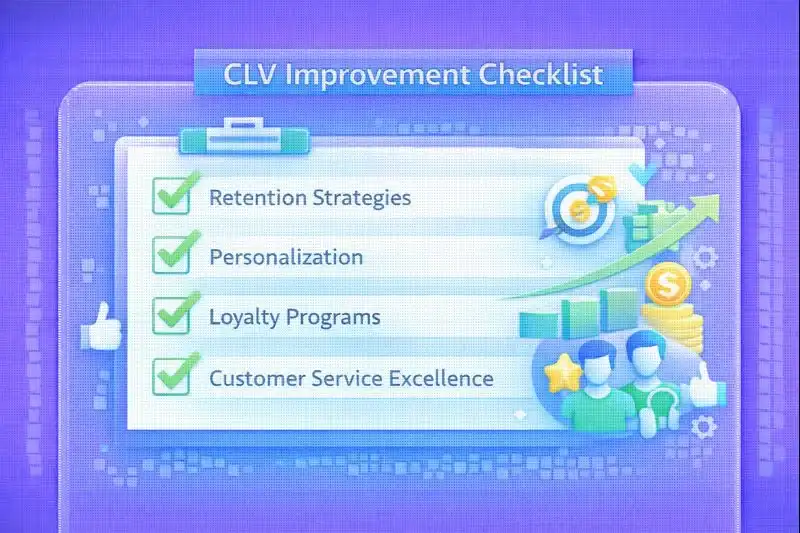
CLV Audit Checklist
Calculation and Analytics
- CLV calculated for main segments
- CAC included in final formula
- Cohort analysis set up
- CLV dynamics tracked monthly
Retention Strategy
- Loyalty program active
- Communication personalization configured
- Automated email scenarios
- Referral program functioning
Tools
- Analytics platform integrated
- CRM synchronized with e-commerce
- Tracking dashboards configured
Optimization
- AOV growth points identified
- Frequency increase strategy developed
- Retention rate improvement plan
FAQ
1. How often should CLV be calculated?
Monthly for operational decisions, quarterly for strategic ones. Automated calculations allow real-time monitoring.
2. Does a small online store need CLV?
Yes, the metric identifies growth points even for small businesses. Understanding customer value helps optimize marketing budget.
3. Does CLV replace ROI or ROAS?
No, CLV complements financial indicators. ROI/ROAS show campaign effectiveness, CLV shows long-term strategy.
4. Can CLV be calculated without CRM?
Yes, basically through e-commerce platform order analytics or Google Analytics. CRM makes calculations more accurate.
5. What is considered a good CLV?
CLV should be at least 3 times higher than CAC. For subscription models – 5-7 times. The indicator depends on the niche.
6. How to increase CLV quickly?
Focus on AOV through bundles and upsell gives quick results. Long-term – investments in retention and loyalty.
7. Is CLV calculated differently for marketplaces?
Yes, you need to consider platform commission and limited direct customer communication capabilities.
Conclusion
Customer Lifetime Value is the foundation of e-commerce scaling. Systematic work with CLV leads to stable income, reduced advertising dependency, and a strong brand.
Investments in understanding and increasing CLV pay off through customer base profitability growth, marketing cost optimization, and business model predictability.
Start calculating CLV today, integrate the metric into marketing decisions, and build your business around the customer. The LetsCommerce platform provides all the tools to track and optimize your online store's Customer Lifetime Value.
Related Articles

Ready to start selling?
Launch your online store today with LetsCommerce.