Introduction
Sustainability has shifted from nice-to-have to business imperative, with 73% of global consumers willing to change purchasing habits to reduce environmental impact (Nielsen, 2024). More importantly, sustainable products now command 5-10% price premiums while growing 5.6x faster than conventional products (NYU Stern, 2024). For e-commerce businesses, this represents both opportunity and competitive necessity.
The numbers are compelling: 81% of consumers expect companies to help improve the environment, and 68% of Millennials and Gen Z actively seek sustainable brands (IBM/NRF, 2024). Brands implementing genuine sustainability programs report 20-30% increase in customer loyalty and 15-25% improvement in customer acquisition through values-based differentiation. However, greenwashing concerns mean authenticity and transparency are critical - 52% of consumers distrust sustainability claims without verification.
This guide explores how to build genuinely sustainable e-commerce operations while effectively communicating environmental commitments to drive business growth.
Understanding Green E-commerce Fundamentals
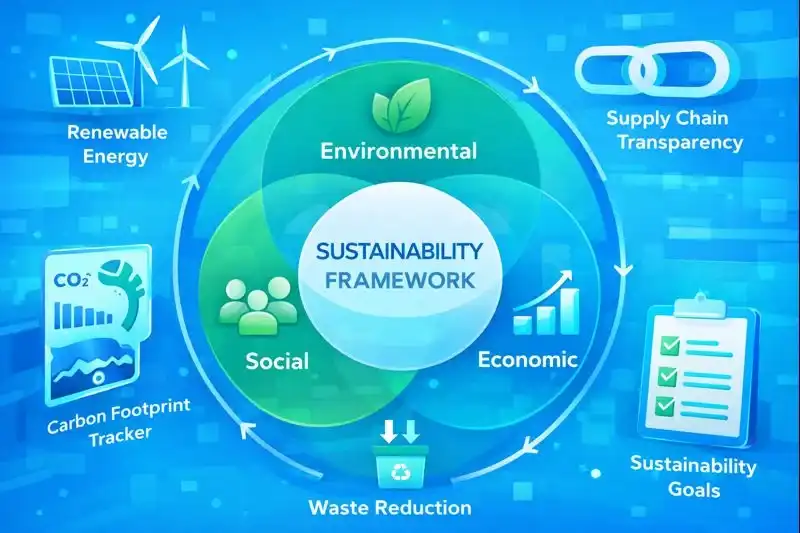
Green e-commerce encompasses environmental responsibility across the entire business lifecycle - sourcing, production, packaging, shipping, and end-of-life product management.
Key Sustainability Pillars for E-commerce
Sustainable sourcing - selecting materials and suppliers with verified environmental credentials. Organic cotton uses 91% less water than conventional cotton. Recycled materials reduce carbon footprint by 30-70% depending on material type.
Eco-friendly packaging - minimizing packaging waste through right-sizing, recyclable materials, and elimination of single-use plastics. 35% of consumers abandon purchases due to excessive packaging (Dotcom Distribution, 2024).
Carbon-neutral shipping - offsetting transportation emissions through verified carbon credits or renewable energy programs. 89% of consumers say carbon-neutral shipping influences purchase decisions positively (Shopify, 2024).
Circular economy models - implementing take-back programs, repair services, and resale platforms extending product lifecycles. Circular economy could generate $4.5 trillion in economic benefits by 2030 (Accenture, 2024).
Consumer Expectations
Transparency - detailed disclosure of environmental impact, supply chain practices, and sustainability goals. Product certifications (B Corp, Fair Trade, Cradle to Cradle) provide third-party validation.
Authentic commitment - consumers distinguish between marketing and genuine environmental responsibility. Actions matter more than words - measurable progress, published sustainability reports, clear improvement timelines.
Convenient sustainability - eco-friendly options shouldn't require customer sacrifice. Seamless integration of sustainable practices into normal shopping experience drives adoption.
Implementing Sustainable Packaging Solutions
Packaging represents the most visible sustainability touchpoint, directly influencing customer perception and actual environmental impact.
Material Selection
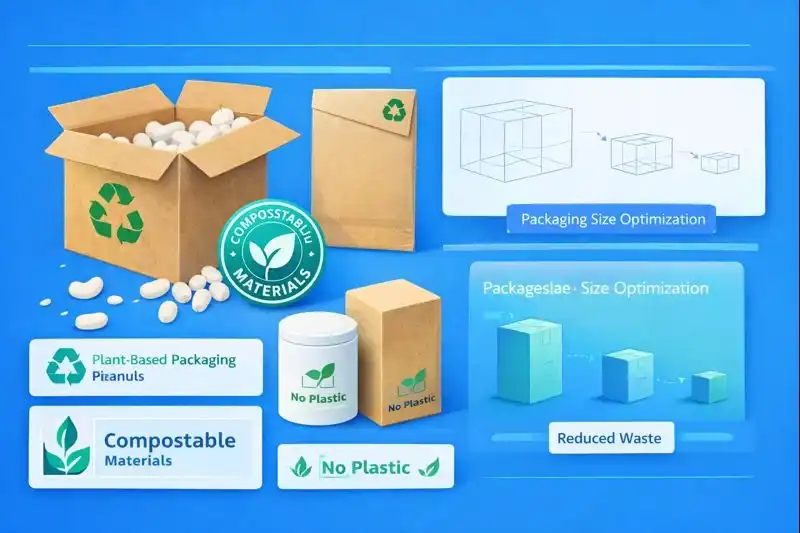
Recycled cardboard - industry standard for sustainable shipping boxes. Post-consumer recycled content of 80-100% reduces virgin material use. Cost: comparable to standard boxes ($0.50-$2.00 per box depending on size).
Biodegradable mailers - compostable poly mailers from cornstarch or other plant materials decompose within 90-180 days vs. 500+ years for traditional plastic. Cost: $0.30-$0.60 each (20-40% premium over plastic).
Mushroom packaging - mycelium-based protective packaging grows into custom shapes, fully compostable in 30-45 days. Works for electronics and fragile items. Cost: $1-$3 per unit (premium option for high-value products).
Paper tape and labels - replacing plastic tape with paper-based alternatives ensures full recyclability. Minimal cost difference ($0.02-$0.05 per package).
Right-Sizing Strategy
44% of packaging waste comes from oversized boxes creating unnecessary void fill and shipping costs. Implement variable box sizes matching common product dimensions.
Box-on-demand systems (custom-sized boxes for each order) eliminate void fill entirely, reducing packaging material by 40% and shipping costs by 10-15% through optimized dimensional weight. Investment: $15,000-$50,000 for automated systems (worthwhile at 500+ daily orders).
Minimalist approach - remove non-essential packaging elements. Unboxing experience can be memorable without excess - single recycled box, tissue paper wrap, simple branded stamp.
Void Fill Alternatives
Replace plastic bubble wrap and peanuts with: Recycled paper crinkle ($0.10-$0.20 per package), corrugated cardboard inserts for fragile items, air pillows from recycled content (better than peanuts, still reusable), no void fill for non-fragile items with snug-fit packaging.
66% of consumers prefer recyclable void fill over plastic options, even if product arrives less "pristinely" packaged.
Reusable Packaging Programs
Loop and similar platforms enable returnable, reusable packaging - customers return containers after product consumption, get cleaned and refilled. Works best for beauty, personal care, food products.
Deposit-based systems ($5-$10 deposit refunded upon return) drive 60-80% return rates. Operational complexity higher but brand differentiation significant.
Carbon-Neutral Shipping and Logistics
Transportation represents 30-40% of e-commerce carbon footprint. Strategic logistics optimization reduces both environmental impact and costs.
Carbon Offset Programs
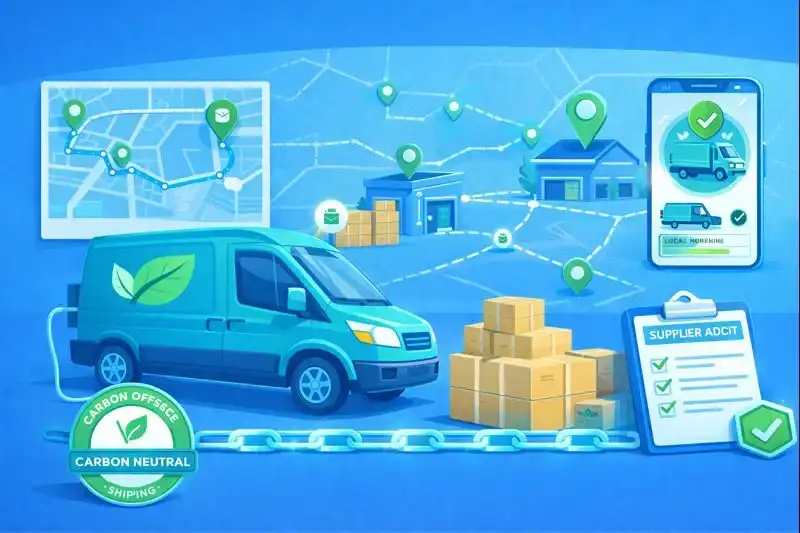
Partner with verified offset providers (Gold Standard, Verified Carbon Standard) funding renewable energy, reforestation, or carbon capture projects. Cost: $0.10-$0.50 per package depending on weight and distance.
Shopify Planet offers built-in carbon offset purchasing for Shopify merchants at $0.15 average per order. EcoCart provides similar services for other platforms.
Transparency critical - show customers exact offset amount and funded projects on order confirmations. "Your order offset 2.5 kg CO2 through wind energy in Texas."
Sustainable Carrier Selection
UPS Carbon Neutral and FedEx Carbon Neutral programs offset shipments automatically (small fee). USPS Ground Advantage uses existing routes minimizing additional trips.
Regional carriers often have lower emissions through concentrated delivery areas. OnTrac, LaserShip in respective regions may provide 15-25% lower carbon footprint than national carriers for local delivery.
Delivery Speed Optimization
Ground shipping produces 50-70% less CO2 than air freight. Incentivize slower shipping through: Free standard shipping (5-7 days) vs. paid expedited ($10+), "Green shipping" option with small discount for choosing slower delivery, carbon savings display ("Choosing standard shipping saves 0.8 kg CO2").
45% of consumers willing to wait longer for environmentally friendly shipping when benefits clearly communicated.
Warehouse and Fulfillment
Renewable energy - power warehouses with solar panels (ROI: 5-8 years) or purchase renewable energy credits ($0.01-$0.03 per kWh premium).
LED lighting reduces energy use 40-60% vs. fluorescent (ROI: 2-3 years). Motion sensors in low-traffic areas cut additional 20-30%.
Regional fulfillment centers reduce shipping distances. Two fulfillment locations (East/West Coast) cut average shipping distance by 30-40% reducing both carbon footprint and delivery times.
Sourcing Sustainable Products
Product sustainability determines overall environmental impact more than packaging and shipping combined.
Supplier Vetting
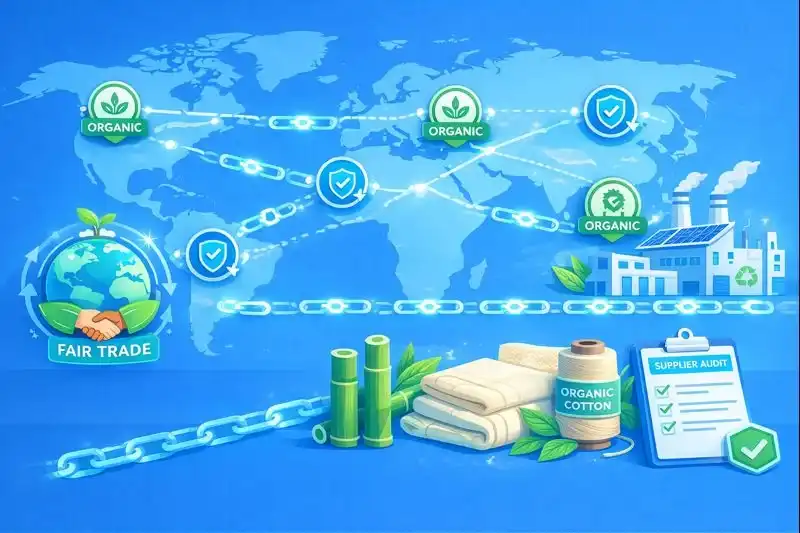
Require environmental certifications from suppliers: ISO 14001 (environmental management), B Corp (comprehensive sustainability), Fair Trade (ethical labor + environment), GOTS (organic textiles), FSC (responsible forestry).
Supplier questionnaires assessing energy sources, waste management, water usage, chemical processes. Prioritize suppliers with published sustainability reports and measurable improvement goals.
Factory audits (in-person or third-party) verify claims. Trust but verify - greenwashing occurs at supplier level too.
Material Innovation
Recycled materials - polyester from plastic bottles, aluminum from recycled cans (70-90% energy savings vs. virgin production).
Bio-based materials - plant-based leather alternatives, algae-based packaging, bamboo textiles (sustainable growth rates 10-30x faster than trees).
Deadstock and upcycled materials - creating products from manufacturing surplus or post-consumer waste eliminates new resource extraction entirely.
Product Durability
Longevity reduces environmental impact more than any other factor. $100 product lasting 10 years has 50-70% lower lifecycle carbon than $50 product lasting 2 years (even if manufacturing initially higher impact).
Invest in quality construction, repairable designs, modular components. Offer repair services and replacement parts extending product life.
Take-Back and Recycling Programs
Product end-of-life responsibility - accept used products for recycling, refurbishment, or responsible disposal. Patagonia's Worn Wear program exemplifies this model.
Incentivize returns - offer store credit ($10-$25) for returned products, creating circular revenue while preventing landfill waste. 30-40% of returned products can be refurbished and resold at discount.
Communicating Sustainability Effectively
Authentic sustainability storytelling drives customer connection while avoiding greenwashing pitfalls.
Transparency and Proof
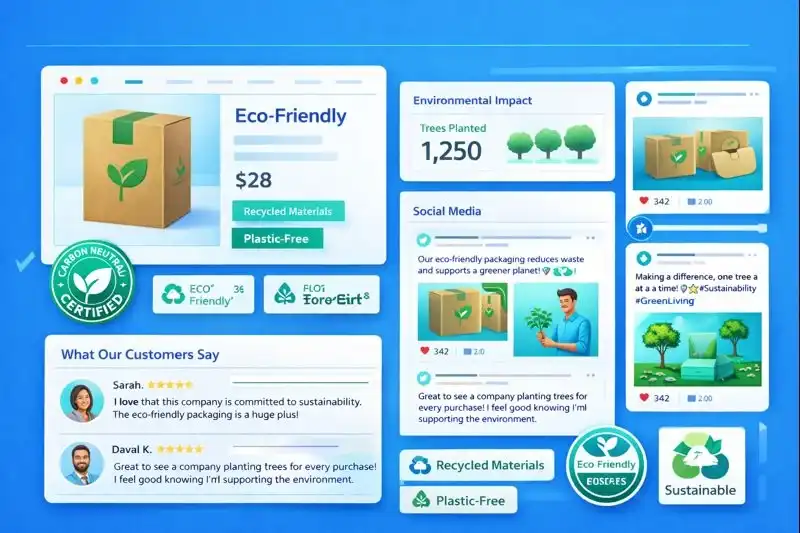
Publish sustainability reports (annual or quarterly) with measurable metrics: tons of CO2 offset, percentage recycled packaging, water saved, waste diverted from landfills. Specificity builds credibility.
Third-party certifications displayed prominently - B Corp, 1% for the Planet, Climate Neutral Certified. Verification matters - 52% distrust unverified claims.
Product-specific impact data - "This product saved 15 liters of water vs. conventional production" on product pages. Quantification resonates more than generic "eco-friendly."
Storytelling Without Overpromising
Share journey, not perfection - "We're not perfect, but here's what we're doing" honesty builds trust. Admit challenges and work-in-progress status.
Focus on specific achievements - "100% recycled packaging" rather than vague "we care about the environment." Concrete claims only.
Avoid absolute language without justification - "most sustainable" or "greenest" invite scrutiny. Use comparative statements with data: "30% less water than industry average."
Visual Sustainability Signals
Eco-badges on product listings (leaf icon, "Sustainable Choice" label) help conscious consumers filter quickly. 45% use sustainability filters when shopping online.
Packaging design communicates values - kraft paper, minimalist printing, recycled content stamps. Visual cues reinforce commitment.
Photography showing sustainable practices - behind-the-scenes of eco-friendly production, team planting trees for offsets, recycling facilities. Visual proof strengthens claims.
Customer Participation
Involve customers in impact - "Together we've offset 10,000 tons of CO2" creates shared achievement. Community building around environmental values.
Carbon footprint calculators on product pages - show environmental impact of purchase + offset amount. Transparency builds trust while normalizing sustainability discussion.
Donation matching - "1% of this purchase supports ocean cleanup" gives customers direct environmental contribution. Collective impact messaging drives engagement.
Frequently Asked Questions
Does sustainable e-commerce actually increase sales?
Yes - when authenticity and value proposition align. Research shows sustainable products grow 5.6x faster than conventional alternatives, with 73% of consumers willing to change habits for environmental reasons. However, sustainability drives sales when: Clear value delivered - eco-friendly doesn't mean compromise on quality, price, or convenience. Transparent communication - specific, verified claims (not vague greenwashing). Target audience alignment - 68% of Millennials/Gen Z prioritize sustainability vs. 40% of Baby Boomers. Revenue impact: Brands implementing comprehensive sustainability see 15-25% improvement in customer acquisition and 20-30% increase in loyalty (IBM, 2024). Pricing: Sustainable products command 5-10% premiums when differentiation is clear. Warning: 52% distrust sustainability claims - shallow greenwashing damages brand more than helping. Invest genuinely or skip entirely.
How much does it cost to make my e-commerce store sustainable?
Initial investment varies dramatically by scope and business size. Minimal investment ($500-$2,000): Switching to recycled packaging (+10-20% cost vs. standard), carbon offset program ($0.10-$0.50 per shipment), sustainability page on website (DIY). Moderate investment ($5,000-$20,000): Certified sustainable product sourcing, comprehensive packaging redesign, third-party certifications (B Corp: $5,000-$50,000 depending on size), upgraded fulfillment practices. Significant investment ($50,000+): Solar warehouse installation, complete supply chain audit and transition, product line sustainability overhaul. Ongoing costs: Sustainable packaging typically 10-30% more expensive initially (economies improve with scale). Carbon offsets $0.10-$0.50 per order ongoing. Cost reduction opportunities: Right-sized packaging reduces shipping 10-15% (cost savings offset material premium). Durability focus reduces returns 15-25% (fewer replacements, less logistics). ROI timeline: Expect 12-24 months for customer acquisition improvements to offset initial investments. Premium pricing and loyalty benefits compound over 2-3 years.
What are the most impactful sustainability improvements for small e-commerce businesses?
Focus on high-visibility, cost-effective changes for maximum impact. Top priorities: 1. Packaging (biggest visible impact): Switch to 100% recycled cardboard boxes (minimal cost increase), eliminate plastic tape/void fill (use paper alternatives), right-size boxes to reduce waste + shipping costs. Impact: 35% reduction in packaging waste, customer-facing proof. Cost: $200-$1,000 initial transition. 2. Carbon-neutral shipping: Implement offset program ($0.15-$0.30 per package). Impact: Offset 30-40% of total carbon footprint. Cost: Variable with volume, but minimal vs. impact. 3. Sustainable product selection: Add 1-3 certified sustainable products to lineup. Impact: Attract eco-conscious segment without overhauling inventory. Cost: Product-dependent. 4. Transparency page: Create "Our Sustainability Commitment" page documenting practices, goals, progress. Impact: Builds trust at zero cost. Cost: Free (DIY). What to skip initially: Expensive certifications (wait until $500K+ revenue), complex take-back programs (operational burden high for small scale), warehouse solar (ROI requires scale).
How do I avoid greenwashing accusations?
Greenwashing damages brand trust severely - prevent through transparency and accuracy. Greenwashing avoidance checklist: Be specific, not vague - "100% recycled packaging" vs. "eco-friendly shipping." Quantify impact - "30% less water vs. conventional" with methodology. Third-party verification - certifications from B Corp, Fair Trade, Climate Neutral provide credibility. Acknowledge limitations - "Our packaging is sustainable, but we're still working on reducing shipping emissions" shows honesty. Avoid exaggeration - don't claim "most sustainable" or "greenest" without comprehensive proof. Substantiate all claims - if you say "carbon neutral," explain exactly how (offsets? renewable energy?). Focus on progress, not perfection - "We've reduced waste 40% since 2023 with goal of 70% by 2026" shows genuine commitment vs. vague aspirations. Red flags triggering greenwashing suspicion: Nature imagery without substance (green leaves on packaging with no actual environmental practices). Vague language ("natural," "green," "eco" without specifics). Hidden trade-offs (highlighting one tiny sustainable feature while ignoring major environmental impacts). False labels (creating official-looking "eco-certified" badges without real certification). Test: Would your claims pass scrutiny from environmental watchdog organizations? If uncertain, dial back language.
Can I charge more for sustainable products?
Yes, but premium must be justified through clear value. Pricing data: Sustainable products command 5-10% premiums when differentiation is obvious. 68% of consumers willing to pay more for verified sustainable options, but price sensitivity varies by category and demographic. Successful premium pricing strategies: Emphasize quality + longevity - "$75 organic cotton t-shirt lasts 5+ years vs. $20 fast fashion lasting 1 year" = lower cost per wear. Certifications and proof - B Corp, Fair Trade, organic certifications justify premium through verified standards. Storytelling - transparent supply chain, artisan partnerships, environmental impact creates emotional value beyond physical product. Bundle value - combine product + carbon offset + take-back program + extended warranty making premium about comprehensive package not just base item. Avoid: Unjustified premiums without clear sustainability differentiation. Significant price gaps (30%+) require extraordinary justification. Price without proof - premium demands transparency. Target customers: Millennials/Gen Z (highest willingness to pay for sustainability). Higher income ($75K+) less price-sensitive for values alignment. Category fit: Beauty, fashion, food see strongest sustainable premiums vs. commodity electronics/household goods where price sensitivity higher.
Related Articles
- How to Keep Customers After the Promotion Ends - Build lasting customer relationships through shared sustainability values
- Why Your Store Needs a Loyalty Program - Create loyalty programs rewarding sustainable purchasing behaviors
- How to Make Shopping Convenient - Balance sustainability with convenience for optimal customer experience
Conclusion
Green e-commerce represents a $150 billion opportunity with sustainable products growing 5.6x faster than conventional alternatives. The business case is clear: 73% of consumers willing to change purchasing habits for environmental reasons, sustainable brands command 5-10% price premiums, and eco-conscious customers show 20-30% higher loyalty. However, authenticity is critical - 52% distrust unverified sustainability claims, making greenwashing a serious brand risk.
Start with high-impact, cost-effective improvements: switch to 100% recycled packaging ($200-$1,000 investment), implement carbon offset shipping ($0.15-$0.30 per package), create transparency page documenting commitments, and add certified sustainable products to inventory. Focus on specific, verifiable claims supported by third-party certifications (B Corp, Climate Neutral, Fair Trade) rather than vague "eco-friendly" language.
The competitive advantage goes to brands genuinely committed to environmental responsibility, not those merely marketing green. Invest in measurable sustainability improvements, communicate through transparent storytelling, and view green e-commerce as long-term brand building (12-24 month ROI) rather than quick marketing tactic. The future belongs to businesses aligning profit with environmental responsibility.

Ready to start selling?
Launch your online store today with LetsCommerce.