Introduction
A loyalty program is a powerful tool for strengthening customer relationships and boosting sales. It not only encourages customers to return for new purchases but also increases the perceived value of your brand in their eyes. In an era where consumers have plenty of choices, a loyalty program can be the factor that helps your store stand out from competitors.
According to recent research by Bond Brand Loyalty (2024), 79% of customers say loyalty programs make them more likely to continue doing business with brands. Even more compelling, repeat customers spend 67% more than new customers (Bain & Company), and companies with strong loyalty programs grow revenues 2.5x faster than competitors (Accenture Strategy).
In this article, we'll explore the main types of loyalty programs, how to motivate customers to make new purchases, create a user-friendly program, and gather feedback to improve it.
Types of Loyalty Programs
Loyalty programs come in various forms, each with its own features. The main types include discount, bonus, and cashback programs. Each type allows customers to feel rewarded for shopping at your store, which fosters their loyalty.
Discount Programs
Discount programs allow customers to earn discounts on future purchases. For instance, customers may receive a certain percentage off their next purchase with each transaction.
Bonus Programs
Bonus programs allow customers to accumulate points for purchases, which can then be redeemed for discounts or other rewards. This encourages shoppers to make more purchases to collect the necessary points.
Cashback Programs
Cashback programs return a portion of the money spent as points or real cash. This is an excellent way to motivate customers to shop more, as they know they'll get some of their money back.
Tiered/VIP Programs
Tiered programs create different membership levels (Bronze, Silver, Gold, Platinum) based on customer spending or engagement. As customers progress through tiers, they unlock increasingly valuable rewards. This gamification encourages customers to spend more to reach the next level and creates a sense of achievement and status.
Hybrid Programs
The most effective modern loyalty programs combine multiple approaches. For example, customers earn points (bonus), get cashback on purchases, and unlock tier-based benefits as they spend more. This multi-layered approach maximizes engagement by appealing to different customer motivations.
Choosing the Right Loyalty Program Type
The best program type depends on your business model, average order value, and customer behavior:
For Low AOV Stores ($20-50): Points-based programs work best. Customers can accumulate rewards quickly with frequent purchases, maintaining engagement.
For Medium AOV Stores ($50-150): Hybrid programs combining points with occasional cashback promotions optimize both frequency and value.
For High AOV Stores ($150+): Tiered VIP programs create exclusivity and encourage customers to increase spending to reach premium tiers.
For Subscription Stores: Cashback or credit-based systems that apply to renewal purchases create compelling retention incentives.
Industry-Specific Considerations: Fashion/beauty brands benefit from early access tiers, while grocery/consumables thrive with straightforward cashback to encourage frequent repeat purchases.
Top Loyalty Program Platforms Comparison
Choosing the right platform is crucial for program success. Here's a comprehensive comparison of leading loyalty solutions:
| Platform | Best For | Monthly Cost | Key Features | Integration | Rating |
|---|---|---|---|---|---|
| Smile.io | Shopify stores | $49-$999 | Points, VIP tiers, referrals, easy setup | Shopify, BigCommerce, Wix | 4.8/5 |
| Yotpo Loyalty | Medium-large stores | $199-$599 | Points, tiers, reviews integration, SMS | Shopify, Magento, custom | 4.6/5 |
| LoyaltyLion | Growing brands | $159-$579 | Points, tiers, analytics, A/B testing | Shopify, WooCommerce, custom | 4.7/5 |
| Growave | All-in-one solution | $49-$299 | Points, reviews, wishlists, UGC | Shopify only | 4.8/5 |
| Stamped.io | Review-focused | $23-$149 | Points, reviews combined, affordab |
le | Shopify, BigCommerce | 4.7/5 | | Klaviyo | Email-first brands | Free-$200+ | Points with email integration | Shopify, WooCommerce, many | 4.6/5 | | WooCommerce Points | WordPress stores | $129 one-time | Basic points, flexible rules | WooCommerce only | 4.3/5 |
Platform Selection Criteria:
- Budget: Start with Stamped.io ($23) or Growave ($49) for basic needs
- Scale: Enterprise stores should consider Yotpo or LoyaltyLion for advanced analytics
- Tech Stack: Shopify users have most options; WooCommerce is more limited
- Features Needed: If combining reviews + loyalty, choose Yotpo, Stamped, or Growave
- Email Integration: Klaviyo offers seamless loyalty + email marketing automation
Step-by-Step Implementation Guide
Phase 1: Planning (Week 1-2)
- Define Program Goals: Decide on primary objective (increase repeat rate, AOV, or referrals)
- Analyze Customer Data: Review purchase frequency, AOV, and customer segments to set realistic earn/burn rates
- Set Reward Economics: Calculate points-to-dollar ratio. Common formula: 1 point = $0.01-0.05 value
- Choose Platform: Select based on budget, features, and technical requirements
- Design Program Structure: Determine earning rules (1 point/$1 spent), redemption thresholds, and tier requirements if applicable
Phase 2: Setup (Week 3-4)
- Install Platform: Follow platform documentation for technical integration
- Configure Earning Rules:
- Points per dollar spent (typically 1-10 points/$1)
- Bonus actions: account creation (+100 points), birthday (+200 points), social follows (+50 points each)
- Referral rewards: Friend gets 10% off, referrer gets 500 points
- Set Redemption Options:
- 500 points = $5 off (10% discount equivalent)
- 1000 points = $12 off (12% discount equivalent—better value encourages saving)
- 2500 points = $30 off (premium tier reward)
- Design Program Branding: Create on-brand loyalty widgets, emails, and landing pages
- Create Tier Structure (if applicable):
- Bronze: $0-500 spent/year - Standard earning rate
- Silver: $500-1500 spent/year - 1.25x points multiplier
- Gold: $1500+ spent/year - 1.5x points, free shipping, early access
Phase 3: Launch (Week 5-6)
- Soft Launch: Enable for 10% of customers to test functionality
- Monitor Technical Performance: Check point calculations, redemptions, and integration stability
- Gather Initial Feedback: Survey early adopters about user experience
- Fix Issues: Address any bugs or confusing elements
- Full Launch: Announce via email, social media, website banners, and checkout messaging
Phase 4: Promotion (Week 7-8)
- Email Campaign: Send series explaining program benefits, how to earn/redeem, and limited-time signup bonus
- Website Optimization: Add loyalty widget to all pages, prominent signup CTA, points balance in header
- Social Media: Create posts showing reward examples, member testimonials, tier benefits
- Checkout Integration: One-click enrollment during checkout with immediate points for that purchase
- Retargeting Ads: Target non-members with "Join & Get 200 Bonus Points" messaging
Timeline: Most stores complete implementation in 6-8 weeks from planning to full launch.
How to Motivate Customers
Motivating customers to use the loyalty program is the foundation of successful interaction. It's important to offer rewards that appeal to your audience and update them regularly to maintain customer interest.
Reward Ideas
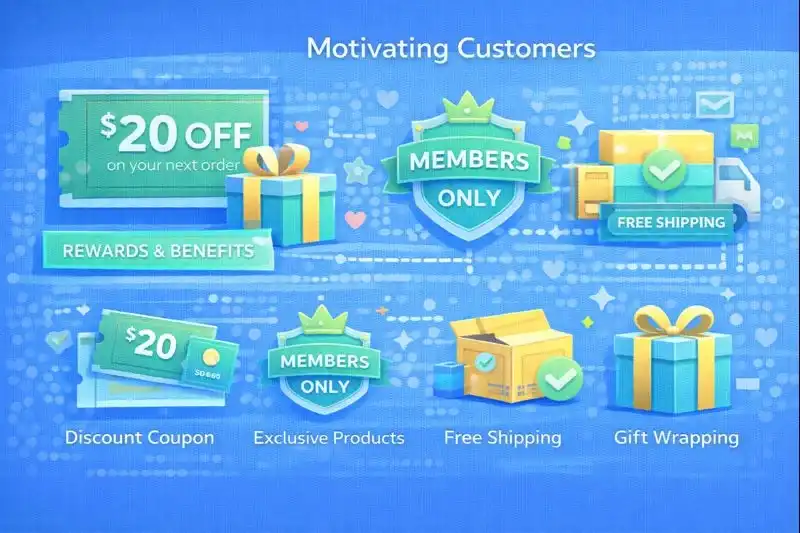
- Discounts on Future Purchases: A simple and popular method that always works. Offer tiered discounts (500 points = $5 off, 1000 points = $12 off) to encourage saving.
- Exclusive Products: Offer products that are only available to loyalty program members. Limited-edition items or early access to new collections create urgency.
- Additional Services: Free shipping, gift wrapping, or extended warranties add extra value to purchases. Priority customer support and extended return windows enhance the premium feeling.
- Experiential Rewards: Virtual styling sessions, exclusive webinars, or behind-the-scenes content create memorable brand connections beyond transactional value.
- Birthday & Anniversary Rewards: Double points during birthday month or anniversary bonuses show personal appreciation and drive predictable engagement spikes.
Psychological Triggers That Drive Engagement
Understanding customer psychology maximizes program effectiveness:
- Progress Indicators: Show customers how close they are to their next reward ("Only 50 points away from $5 off!"). Progress bars increase redemption likelihood by 32%.
- Gamification Elements: Badges, streaks, and achievement unlocks tap into completion psychology. "Shop 3 days in a row for bonus points" creates habit formation.
- Loss Aversion: Highlight expiring points ("200 points expire in 30 days") to trigger action. This converts 40% more inactive members than positive messaging alone.
- Social Proof: Display member counts ("Join 50,000+ loyalty members") and showcase top-tier benefits to create aspiration.
- Instant Gratification: Offer immediate points at checkout rather than delayed crediting. Real-time balance updates increase perceived value by 25%.
Well-chosen rewards combined with psychological triggers increase customer satisfaction and encourage repeat purchases.
Creating a User-Friendly Loyalty Program
A loyalty program should be simple and easy for all customers to understand. Complicated systems can quickly confuse customers, leading to a loss of interest. Develop a program that’s easy to use and provides clear instructions.
Tips for Creating a User-Friendly Program
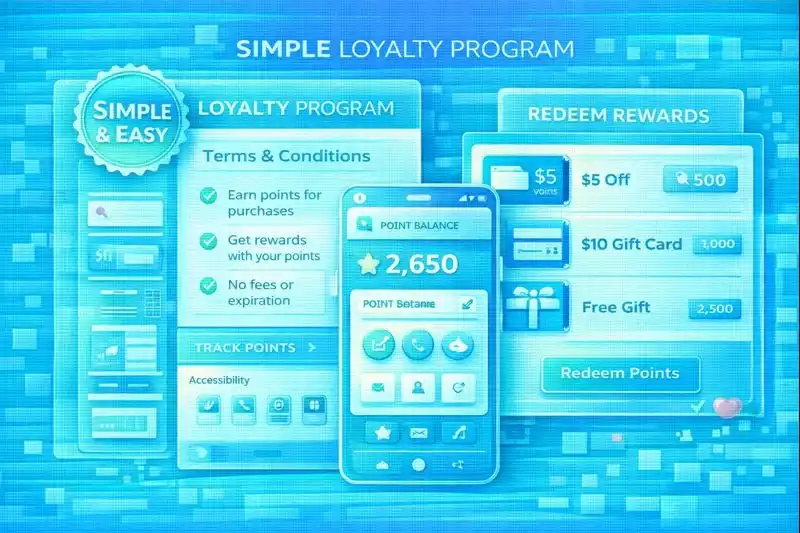
- Simple Point System: Define how customers can earn points and for which amounts.
- Clear Terms: Explain how customers can use points or discounts.
- Information Accessibility: Ensure easy access to information about point balances and redemption options.
The simpler the program, the more customers will want to use it.
Gathering Customer Feedback
Understanding what your customers need is essential for a successful loyalty program. Collecting feedback helps identify which aspects of the program work well and which need improvement.
How to Collect Feedback
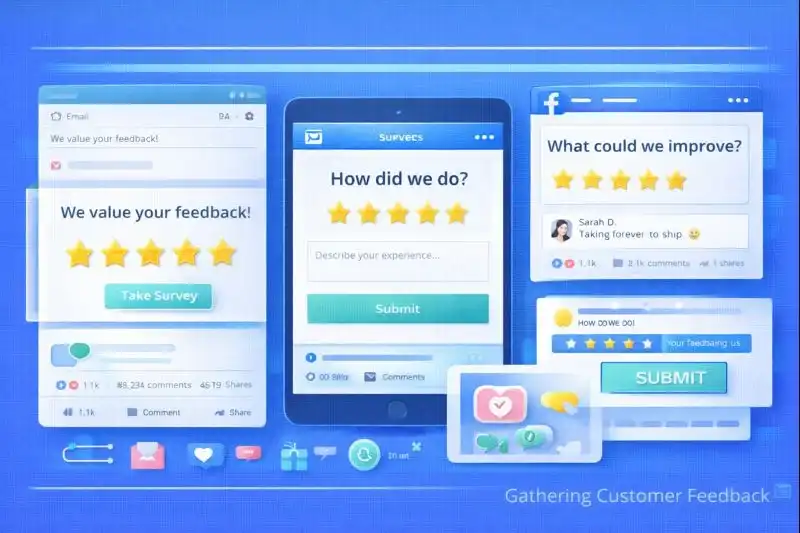
- Email Surveys: Send customers a short survey with simple questions about the loyalty program.
- Social Media Feedback Requests: Ask customers to share their feedback or suggestions on social media.
- Feedback Form on the Website: Allow customers to leave comments directly on your website.
Feedback allows you to continuously improve the program and tailor it to your audience's needs.
Maintaining Ongoing Interest
To keep customers actively using the loyalty program, it’s important to sustain their interest. Regularly remind them of the points they can earn, update rewards, and offer special promotions for program members.
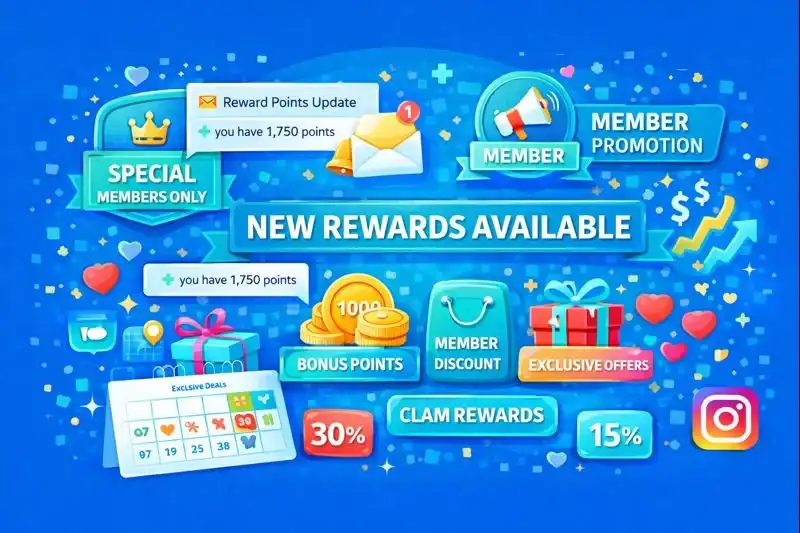
How to Keep Customers Interested
- Reward Updates: Change rewards regularly to keep things exciting.
- Special Promotions for Members: Hold additional promotions exclusively for loyalty program members.
- Reminder Emails: Periodically send emails about available points or discount opportunities.
Maintaining interest in the loyalty program fosters a steady flow of repeat customers.
Measuring the Effectiveness of Your Loyalty Program
To understand how successful your loyalty program is, it's essential to measure its effectiveness. Analyze the number of program participants, their activity levels, and the impact on overall sales.
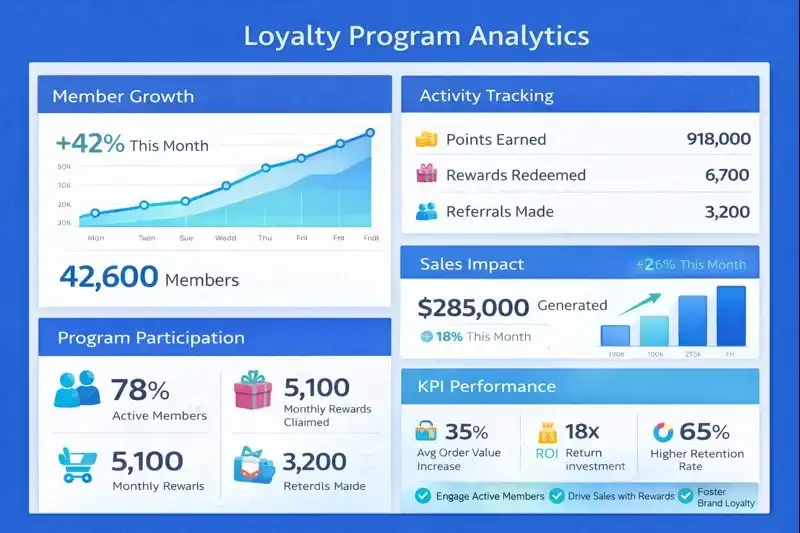
Key Metrics for Analysis
- Enrollment Rate: Track how many customers join the program over a certain period. Target: 30-40% of total customers, 50-60% with signup incentives.
- Active Engagement Rate: Percentage of members who earn or redeem points monthly. Target: 30%+ for healthy program activity.
- Redemption Rate: Percentage of earned points that get redeemed. Target: 15-25% (too high hurts margins, too low signals poor value perception).
- Repeat Purchase Rate: Compare purchase frequency between members vs non-members. Expect 20-40% higher among active members.
- Average Order Value (AOV): Track whether members spend more per transaction. Benchmark: 12-18% higher AOV for loyalty members.
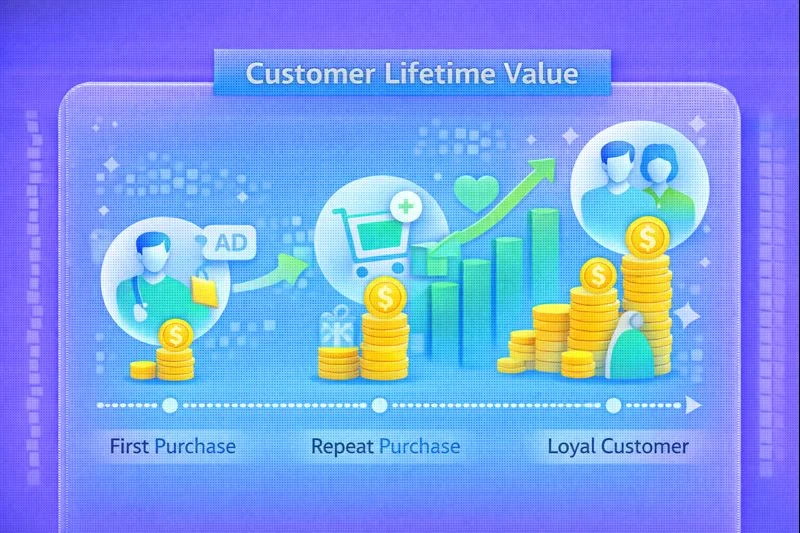
- Customer Lifetime Value (CLV): Calculate total revenue per customer over their relationship with your brand. Target: 30-50% higher CLV for program members.
- Points Liability: Total unredeemed points value outstanding. Monitor to ensure it doesn't exceed 5-8% of annual revenue.
- Program ROI: (Additional Revenue from Members - Program Costs) / Program Costs. Target: 300-500% ROI in year one.
Advanced Analytics to Track
- Tier Distribution: How many members are in each tier? Are customers progressing through tiers as intended?
- Breakage Rate: Percentage of points that expire without redemption (typically 10-20%).
- Incremental Revenue: Revenue specifically attributable to loyalty program existence, not just member spending.
- Earn/Burn Ratio: Balance between points issued vs redeemed. Healthy ratio is 1.2-1.5:1 (more earned than burned).
- Time to First Redemption: How long after signup do members redeem? Shorter is better (target: within 60 days).
Dashboard Essentials
Create a weekly dashboard tracking:
- New enrollments this week vs last week
- Active members (earned/redeemed in past 30 days)
- Points issued vs redeemed (track liability)
- Revenue from loyalty members vs non-members
- Average points balance per member
- Redemption conversion rate (points available → points redeemed)
Regular analysis helps you identify what works well and what needs improvement. Most successful programs review metrics weekly and make adjustments monthly.
Real-World Success Stories: Loyalty Programs That Work
Case Study 1: Sephora Beauty Insider (Tiered Program Success)
Sephora's Beauty Insider program is consistently ranked as one of retail's best loyalty programs, demonstrating the power of tiered rewards:
- Program Structure: 3 tiers (Insider, VIB, Rouge) based on annual spending ($0, $350, $1,000 thresholds)
- Rewards: Points redeemable for products, exclusive access to sales, free beauty classes, birthday gifts
- Results: 25+ million members generating 80% of annual sales, with Rouge tier members spending 15x more than non-members
- Key Success Factor: Experiential rewards (beauty classes, early product access) create emotional connection beyond transactional value
Case Study 2: The North Face VIPeak (Hybrid Points + Experiences)
Outdoor retailer The North Face created a program blending points with experiential rewards:
- Program Structure: Earn points for purchases, social shares, event attendance, and product reviews
- Unique Rewards: Points redeem for gear AND exclusive experiences (guided climbs, outdoor workshops, athlete meet-and-greets)
- Results: 60% enrollment rate among customers, 40% increase in repeat purchases, members spend 2.8x more annually
- Key Success Factor: Aligned rewards with brand values (outdoor experiences) rather than just discounts
Case Study 3: Starbucks Rewards (Mobile-First Simplicity)
Starbucks built the most successful quick-service loyalty program through mobile integration:
- Program Structure: Stars earned per dollar spent, redeemable for free drinks/food at flexible thresholds (25, 100, 200, 300, 400 stars)
- Mobile Integration: Order ahead, pay via app, automatic star tracking, personalized offers
- Results: 31 million active members in US (2024), loyalty members drive 55% of company revenue
- Key Success Factor: Frictionless mobile experience + variable redemption options (flexibility = higher engagement)
Key Takeaways from Successful Programs
- Simplicity Wins: All three programs have clear earning/redemption structures customers understand immediately
- Mobile-First: Seamless app integration dramatically increases engagement (Starbucks proves this)
- Emotional Connection: The most successful programs offer more than discounts—exclusive access, experiences, and community
- Personalization: Using purchase data to send relevant offers increases redemption rates by 40-60%
- Flexibility: Variable redemption thresholds (Starbucks' 25-400 stars) accommodate different customer values
Common Mistakes to Avoid
1. Overcomplicated Earning/Redemption Rules
The Mistake: "Earn 1.5 points per dollar on Tuesdays, 2x points on birthdays, 3x points for category A but 0.5x for category B, redeem at 17.3 points = $1 value..."
Why It Fails: 54% of customers abandon programs they can't understand (Colloquy Research). Complex math kills engagement.
The Fix: Use simple ratios (1 point = $1 spent, 100 points = $5 off). If you want complexity, add it to bonus earning opportunities, not base mechanics.
2. Rewards That Take Too Long to Achieve
The Mistake: First redemption requires 2,000 points but customers only earn 50 points per purchase. At average $75 AOV, that's 30+ purchases to first reward.
The Fix: Enable first redemption within 2-3 purchases for average customer. Offer signup bonus (100-200 points) to accelerate time-to-value.
3. Forgetting to Promote the Program
The Mistake: Launch the program with one email announcement, then never mention it again. No checkout reminders, no ongoing marketing.
Why It Fails: Even great programs fail without visibility. Customers forget to join or don't realize benefits.
The Fix: Persistent visibility—checkout CTAs, email signatures, post-purchase reminders, header balance display for members, quarterly promotional campaigns.
4. No Differentiation from Competitors
The Mistake: Offering the exact same points-for-discounts structure as every competitor. No unique value proposition.
Why It Fails: Generic programs don't create loyalty, just price sensitivity. Customers join all competitor programs and shop whoever has the best current sale.
The Fix: Add unique elements—exclusive products, experiences, partnerships, or brand-aligned rewards that competitors can't replicate.
5. Ignoring Program Economics
The Mistake: Offering 10% back in points (10 points = $1 spent, 100 points = $10 off) without calculating margin impact. On 30% margin products, this erases 1/3 of profit.
Why It Fails: Unsustainable programs get cancelled, frustrating loyal customers who invested time earning points.
The Fix: Calculate reward cost as percentage of revenue (target: 2-5%), model redemption rates, and stress-test economics before launch. Build in point expiration (12-18 months) to manage liability.
Frequently Asked Questions
How much does it cost to implement a loyalty program?
Loyalty program costs range from $0 to $500/month depending on the platform and features. Free options include basic points systems through platforms like WooCommerce Points & Rewards. Mid-tier solutions like Smile.io or Yotpo start at $49-99/month for small to medium stores, while enterprise solutions can cost $500+ monthly. However, the average ROI is 4.9x the investment (Annex Cloud, 2024), making it profitable within 3-6 months for most stores.
What percentage of customers typically join loyalty programs?
Industry benchmarks show 30-40% of customers enroll in loyalty programs when properly promoted. Stores that offer immediate signup rewards (e.g., "Join now, get 100 points worth $5") see enrollment rates of 50-60%. The key is making the value proposition clear and the signup process simple—ideally one-click enrollment at checkout.
Do loyalty programs really increase sales?
Yes, conclusively. Data from Bain & Company shows repeat customers spend 67% more than new customers. Stores with active loyalty programs report 20-35% higher customer lifetime values and 25-40% increases in repeat purchase rates. The most successful programs combine points rewards with exclusive perks like early access to sales or free shipping thresholds.
What's the best type of loyalty program for online stores?
Points-based programs work best for most online stores because they're simple, flexible, and encourage repeat purchases. Customers earn 1 point per $1 spent (or similar ratios) and redeem points for discounts or free products. For stores with higher average order values (over $100), tiered programs (Bronze/Silver/Gold) work well as they incentivize customers to spend more to reach the next level.
How do I prevent customers from only shopping during promotions?
Layer your loyalty program with non-promotional benefits like free shipping, early access to new products, birthday rewards, and exclusive content. Make points accumulate year-round, not just during sales. You can also use points expiration (e.g., points expire after 12 months) to encourage regular engagement. The key is making the everyday benefits compelling enough that customers shop regularly, not just when there's a sale.
Related Articles
Looking to maximize customer retention? Check out these complementary strategies:
- How to Keep Customers After Promotions End: 7 Retention Strategies - Learn tactics to turn one-time promotion shoppers into loyal customers
- Holiday Email Campaign Ideas That Boost Sales 50%+ - Combine loyalty programs with email marketing for maximum impact
- Social Proof for E-commerce: Using Reviews to Increase Sales 35% - Build trust alongside your loyalty program
Conclusion
A loyalty program is not only a way to boost sales but also an opportunity to create strong, long-term relationships with customers. With 79% of consumers preferring brands with rewards programs and repeat customers spending 67% more, the ROI is clear. It's essential to develop a convenient, easy-to-understand program that provides real benefits to customers and encourages them to return again and again.
Start with a simple points-based system, offer immediate signup value, and continuously optimize based on customer feedback. The investment—whether $0 or $500/month—will pay for itself many times over through increased customer lifetime value and reduced acquisition costs.