

Introduction
Social commerce is revolutionizing online retail, with TikTok Shop leading the charge as the fastest-growing social selling platform. According to eMarketer, social commerce sales in the US reached $67.4 billion in 2024, projected to hit $144.7 billion by 2027 (eMarketer, 2024). TikTok Shop specifically generated over $15 billion in global sales in 2024 (Bloomberg), with 45% of Gen Z and Millennials making purchases directly through social media (Accenture).
The platform's unique combination of entertainment and commerce has created unprecedented opportunities for brands. TikTok Shop merchants report average conversion rates of 8-12%, significantly higher than traditional e-commerce's 2-3% (Shopify Social Commerce Report, 2024). With 1.5 billion monthly active users and average session times of 52 minutes, TikTok offers unparalleled reach and engagement for product discovery.
This comprehensive guide explores how to leverage TikTok Shop and social commerce platforms to transform your e-commerce strategy, from setup and optimization to scaling sales and measuring ROI.
Understanding TikTok Shop and Social Commerce
Social commerce represents the convergence of social media and e-commerce, enabling consumers to discover, research, and purchase products without leaving social platforms. Unlike traditional e-commerce that requires navigating to external websites, social commerce creates a seamless shopping experience within the social ecosystem.
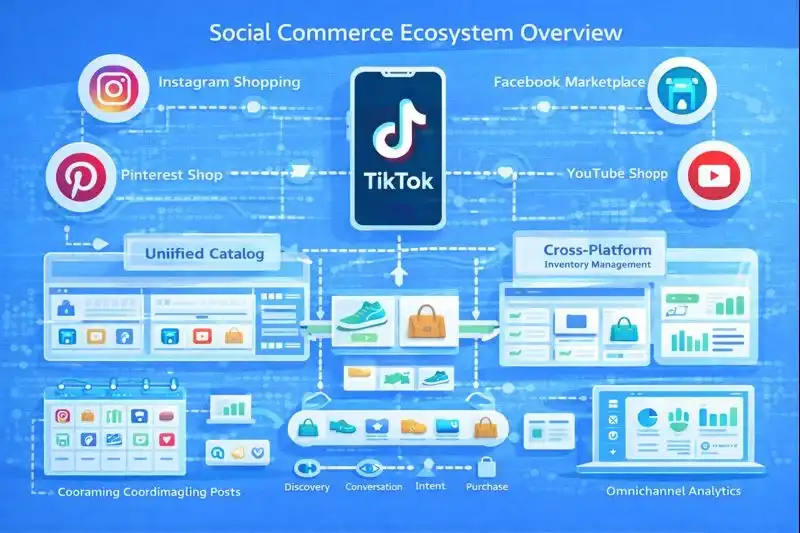
Key Social Commerce Platforms in 2025
- TikTok Shop: Native in-app shopping with live commerce, product showcases, and creator partnerships. Strongest among Gen Z (67% of users under 30).
- Instagram Shopping: Integrated shopping tags, product catalogs, and checkout. 44% of users shop weekly on the platform.
- Facebook Marketplace & Shops: Community-driven commerce with 1 billion monthly users accessing Marketplace.
- Pinterest Shopping: Visual discovery platform with 450 million users, 85% of whom use Pinterest for purchase planning.
- YouTube Shopping: Video-integrated product links and live shopping events, reaching 2.5 billion monthly users.
Why TikTok Shop Dominates
TikTok Shop's success stems from its entertainment-first approach. The algorithm prioritizes engaging content over follower counts, meaning even new brands can go viral. Videos under 60 seconds with authentic product demonstrations achieve 3x higher engagement than polished advertisements (TikTok Business, 2024). The platform's "For You Page" exposes products to millions of potential customers organically, while the shopping integration allows impulse purchases during peak interest.
Setting Up Your TikTok Shop
Launching a TikTok Shop requires strategic preparation beyond basic account setup. The platform has specific eligibility requirements and best practices that determine approval and initial success.
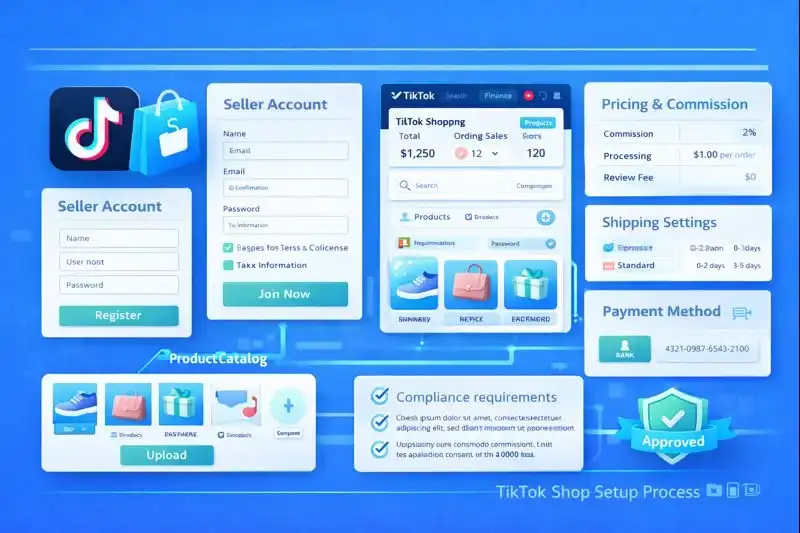
Eligibility Requirements
- Business Registration: Valid business license and tax identification number
- Seller Location: Currently available in US, UK, Southeast Asia (expanding to EU and Canada in 2025)
- Compliance: Products must comply with TikTok's commerce policies (no prohibited items: weapons, drugs, counterfeit goods)
- Fulfillment Capability: Ability to ship orders within 3-5 business days with tracking
Step-by-Step Setup Process
- Create TikTok Business Account: Convert personal account or create new business profile with verified business information
- Apply for TikTok Shop: Submit application through TikTok Seller Center with business documentation
- Connect Payment Processing: Link Stripe, PayPal, or approved payment processor (2.9% + $0.30 typical transaction fee)
- Upload Product Catalog: Add products with high-quality images, detailed descriptions, and competitive pricing
- Configure Shipping: Set up shipping zones, rates, and fulfillment options (free shipping increases conversion by 50%)
- Enable Shop Tab: Activate storefront on your TikTok profile for direct product browsing
Product Catalog Optimization
Successful TikTok Shop catalogs share common characteristics: clear product photography with lifestyle context (studio shots + in-use demonstrations), concise titles with trending keywords (TikTok SEO differs from Google - use conversational language), competitive pricing (users compare prices instantly - match or beat competitors), detailed specifications (size charts, materials, dimensions reduce returns by 35%).
Products priced $15-$75 perform best on TikTok Shop, with the sweet spot at $25-$35 for impulse purchases. Bundle offers and limited-time discounts drive urgency, with flash sales increasing conversion by 3-4x during promotional periods.
Creating High-Converting TikTok Shop Content
Content strategy makes or breaks TikTok Shop success. The platform rewards authentic, entertaining content that naturally integrates products rather than traditional advertising approaches.
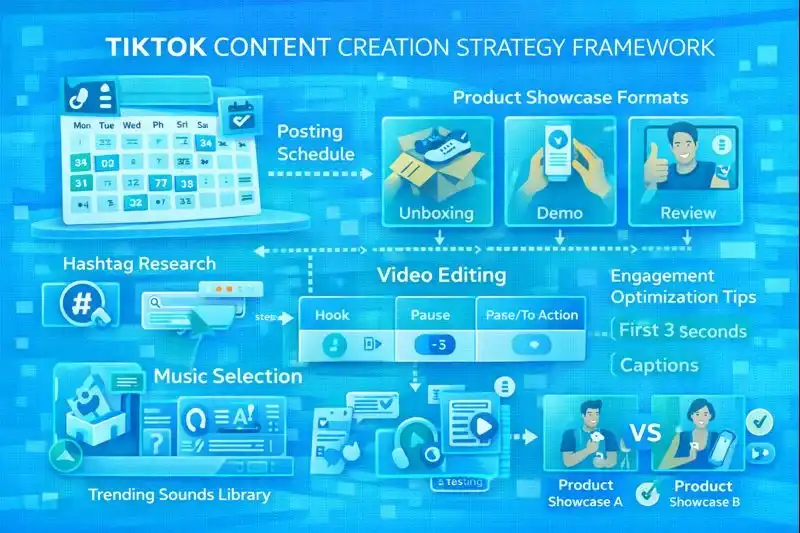
Content Formats That Drive Sales
- Product Demonstrations: Show products in action solving real problems. Videos with "before/after" transformations achieve 40% higher engagement
- Unboxing & Reviews: Authentic first impressions build trust. User-generated unboxing content drives 5x more sales than brand-created ads
- How-To Tutorials: Educational content positions products as solutions. Tutorial videos generate 3x longer watch time
- Behind-the-Scenes: Manufacturing process, quality checks, and team stories humanize brands and increase authenticity
- Trending Sounds & Challenges: Participate in viral trends while showcasing products creatively for algorithmic boost
TikTok-Specific Best Practices
The first 3 seconds determine 65% of video retention - hook viewers immediately with movement, bold text, or surprising visuals. Use vertical 9:16 format exclusively (horizontal videos receive 30% less reach). Add product links in video and pinned comments for easy discovery. Include on-screen text highlighting key benefits since 80% watch without sound initially.
Hashtag Strategy: Combine niche hashtags (#SmallBusinessCheck 2.1B views), trending tags (#TikTokMadeMeBuyIt 38B views), and product-specific tags (#SkinCareTok, #BookTok). Use 3-5 hashtags maximum to avoid appearing spammy. Create branded hashtags for user-generated content campaigns.
Posting Frequency & Timing
Consistency matters more than volume. Post 1-3 times daily for sustained growth versus sporadic posting. Optimal times vary by audience, but general peaks are 6-10 AM and 7-11 PM EST when users browse during commutes and evening downtime. Test different time slots for 2 weeks to identify your audience's peak engagement windows.
Leveraging TikTok Live Shopping
Live shopping events combine entertainment, urgency, and direct interaction, creating powerful conversion opportunities. Live commerce in the US generated $17 billion in 2024, with TikTok capturing the largest share (McKinsey, 2024).
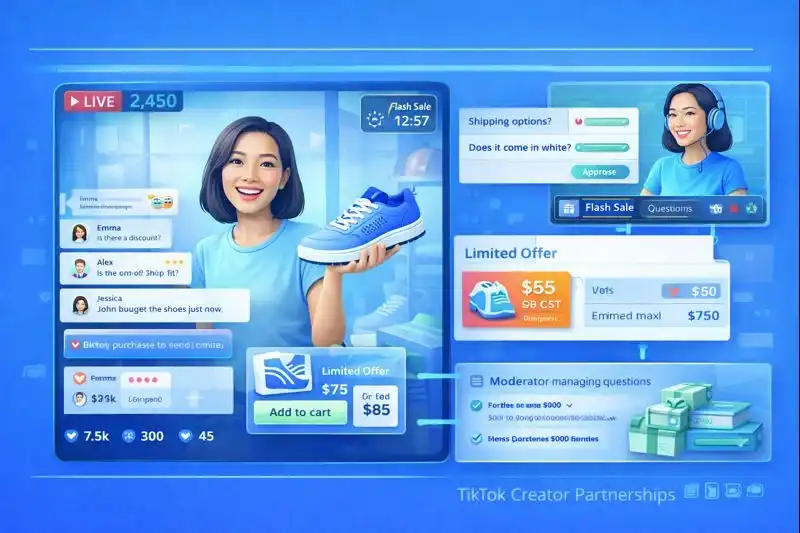
Live Shopping Strategy
Successful live events require preparation: promote 24-48 hours in advance through regular posts and stories, create exclusive live-only offers (15-30% discounts drive urgency), prepare product demonstrations and talking points (30-60 minute streams perform best), engage viewers with Q&A and shoutouts (personal interaction increases conversion by 40%), have limited inventory to create scarcity psychology.
During the live stream, showcase 3-5 hero products rather than overwhelming viewers with entire catalog. Demonstrate each product for 5-10 minutes with multiple angles and use cases. Respond to comments in real-time, addressing questions and concerns immediately. Use flash sales and countdown timers to trigger impulse purchases during peak viewer counts.
Post-Live Optimization
TikTok saves live recordings for 90 days - capitalize on this by pinning the replay to your profile, creating highlight clips for regular posts, and analyzing viewer drop-off points to improve future streams. Successful brands run weekly live events at consistent times to build audience anticipation and routine viewing habits.
Collaborating with TikTok Creators
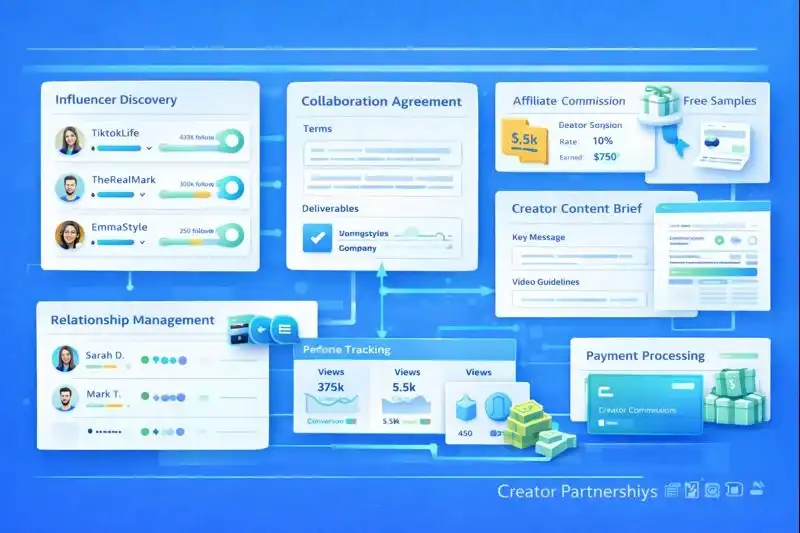
Creator partnerships amplify reach and credibility. Micro-influencers (10K-100K followers) deliver 60% higher engagement than mega-influencers, with more authentic audience connections and affordable collaboration rates (Influencer Marketing Hub, 2024).
Finding the Right Creators
Use TikTok Creator Marketplace (official partnership platform), search niche hashtags to find authentic voices in your category, analyze engagement rates not just follower counts (3-6% engagement is healthy), review comment sentiment to ensure genuine audience connection, check previous brand partnerships for alignment and authenticity.
Partnership Models
- Affiliate Commission: 10-20% commission on sales driven through creator's unique link (performance-based, low risk)
- Flat Fee + Commission Hybrid: $500-$5,000 flat rate plus 5-10% commission (balances guarantee with performance incentive)
- Product Seeding: Free products in exchange for honest reviews (budget-friendly for startups)
- Exclusive Brand Ambassadorships: Long-term partnerships with monthly retainers ($2,000-$50,000+ depending on creator size)
Campaign Best Practices
Provide creators with product talking points, not scripts - authenticity drives performance. Allow creative freedom while establishing brand guidelines (tone, prohibited claims). Request 3-5 content pieces per partnership to test different angles. Track unique promo codes or affiliate links to measure exact ROI. Build long-term relationships rather than one-off campaigns for sustained brand awareness.
Integrating TikTok Shop with Your E-commerce Stack
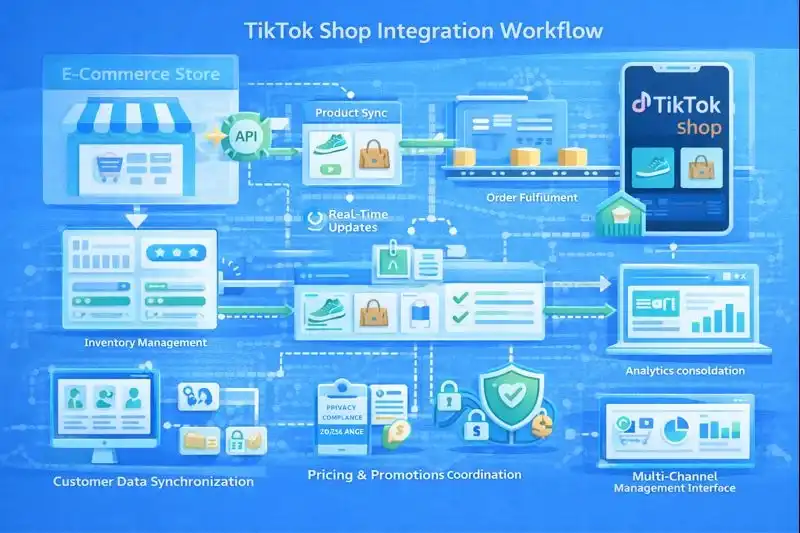
Seamless integration between TikTok Shop and your existing e-commerce infrastructure ensures efficient operations and consistent customer experience across channels.
Platform Integrations
- Shopify: Native TikTok Shopping app syncs product catalog, inventory, and orders automatically. One-click setup, real-time inventory updates
- WooCommerce: TikTok for WooCommerce plugin enables product feed sync and pixel tracking for retargeting
- BigCommerce: Built-in TikTok Shopping integration with automated catalog management
- Custom Solutions: TikTok Commerce API for headless commerce and custom platform integrations
Inventory Management
Centralized inventory systems prevent overselling across channels. Use inventory management tools like Linnworks, SkuVault, or Cin7 to sync stock levels between TikTok Shop, your website, and other marketplaces in real-time. Set safety stock buffers (15-20% reserve) for popular items to handle sudden viral spikes without stockouts.
Order Fulfillment Workflow
Orders from TikTok Shop should flow into your central order management system alongside website orders. Implement automated order routing to warehouses or 3PL providers. Ensure tracking numbers upload to TikTok within 24 hours of shipment - late tracking damages seller metrics. Maintain 95%+ on-time shipping rate to avoid platform penalties.
Customer Service Integration
TikTok Shop messages must be answered within 24 hours (preferably under 1 hour for best seller ratings). Integrate TikTok Shop inbox with your customer service platform (Zendesk, Gorgias, Freshdesk) for unified ticket management. Train support team on platform-specific policies for returns, refunds, and disputes.
Measuring TikTok Shop Performance and ROI
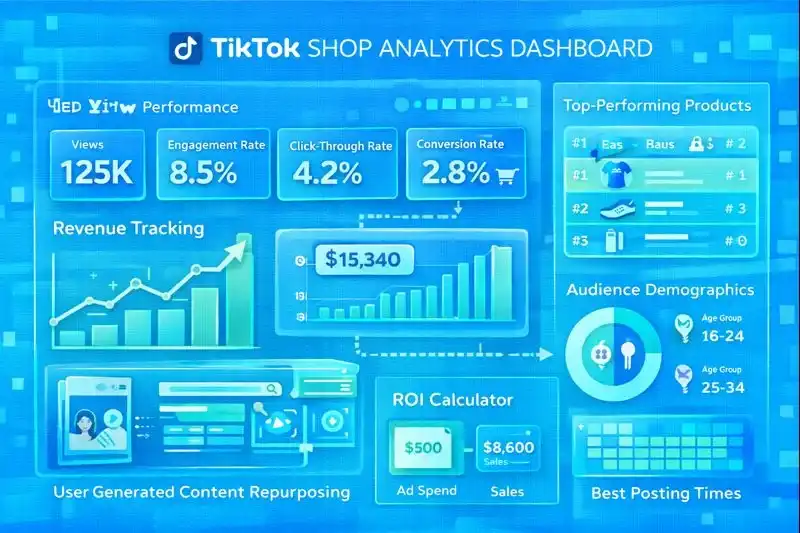
Data-driven optimization separates successful TikTok Shop merchants from struggling sellers. Track the right metrics and iterate based on performance insights.
Key Performance Indicators
- Gross Merchandise Volume (GMV): Total sales value before returns and fees
- Conversion Rate: Product page visitors to purchasers (target: 8-12%)
- Average Order Value (AOV): Target $35-$50 through bundling and upsells
- Return Rate: Keep below 15% through accurate descriptions and sizing
- Customer Acquisition Cost (CAC): Including creator fees, ad spend, and promotional discounts (target: CAC < 30% of AOV)
- Seller Rating: Maintain 4.7+ stars for platform visibility and trust
Content Analytics
Monitor video completion rate (aim for 50%+ for algorithm favor), engagement rate (likes, comments, shares - target 3-6%), profile visits from videos (indicates strong product interest), shop click-through rate (video viewers to product page - target 5-10%), follower growth rate (sustainable growth indicates brand building).
Attribution and Multi-Touch Analysis
TikTok Shop sales often result from multiple touchpoints - users see content organically, visit profile, return later to purchase. Implement TikTok Pixel on your website to track full customer journey including off-platform conversions. Use UTM parameters in bio links to track traffic sources. Compare direct TikTok Shop sales vs. website referrals from TikTok to calculate total platform impact.
ROI Calculation Framework
Calculate true ROI including all costs: product cost + shipping + TikTok fees (2-8% commission) + creator payments + ad spend + operational overhead. Healthy TikTok Shop businesses achieve 3:1 to 5:1 ROAS (Return on Ad Spend). Factor in customer lifetime value (LTV) - first TikTok purchase may be unprofitable, but repeat purchases through email and retargeting improve overall profitability.
Scaling Your Social Commerce Strategy
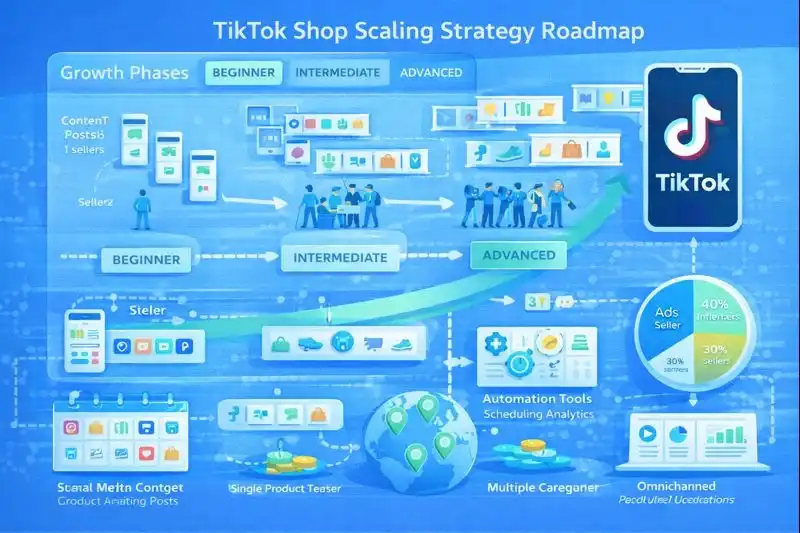
After achieving initial success, systematic scaling maximizes revenue while maintaining efficiency and profitability.
Expanding Product Catalog Strategically
Add products based on data, not intuition. Analyze best-selling items and introduce complementary products for cross-selling. Test new products through organic content first before investing in creator partnerships. Maintain catalog quality over quantity - 50 optimized products outperform 500 poorly presented items.
Geographic Expansion
As TikTok Shop expands to new markets (EU, Canada, Australia in 2025), early entry provides competitive advantage. Prepare localized content with region-specific creators, currency and payment options aligned with local preferences, compliance with regional regulations (GDPR, local consumer protection laws), logistics infrastructure for efficient international shipping.
Omnichannel Integration
Successful brands use TikTok Shop as one touchpoint in a multi-channel strategy. Customer journeys often start on TikTok but complete through other channels: retarget TikTok visitors on Facebook/Instagram, capture emails through exclusive offers for nurture campaigns, drive TikTok audience to YouTube for longer-form content, use TikTok trends to inform product development and website marketing.
Team and Process Scaling
Growth requires operational infrastructure: dedicated content creator or team for consistent posting (in-house or agency), creator partnership manager to source, negotiate, and manage influencer relationships, customer service team trained on TikTok Shop policies and platform, analytics specialist to track performance and optimize strategy, inventory and fulfillment systems that scale with demand spikes.
Frequently Asked Questions
How much money do you need to start selling on TikTok Shop?
Initial investment ranges from $2,000-$10,000 depending on approach and product category. Breakdown: inventory costs ($1,000-$5,000 for initial stock - consider dropshipping or pre-orders to minimize), content creation equipment ($300-$1,000 for smartphone gimbal, ring light, and basic editing software), product photography ($200-$500 for professional photos if DIY isn't feasible), creator partnerships ($500-$2,000 for micro-influencer collaborations), operational buffer ($500-$1,000 for unexpected costs). Start lean with 3-5 hero products and reinvest early profits rather than overleveraging upfront.
What products sell best on TikTok Shop?
Impulse-buy items priced $15-$75 with visual appeal dominate TikTok Shop sales. Top categories in 2024: beauty and skincare (34% of sales, especially Korean beauty and clean ingredients), fashion accessories (jewelry, bags, sunglasses - 22% of sales), home organization (aesthetic storage solutions - 15% of sales), tech gadgets (phone accessories, LED lights - 12% of sales), health and wellness (fitness tools, supplements - 9% of sales). Products must solve a clear problem or provide instant gratification, have strong visual presentation, and offer unique value versus Amazon/traditional retail.
How long does it take to see results from TikTok Shop?
Realistic timeline is 60-90 days for meaningful traction. Month 1: Setup, content testing, learning algorithm preferences - expect $500-$2,000 in sales while finding product-market fit. Month 2-3: Optimize based on data, scale winning content, build creator partnerships - $3,000-$10,000+ monthly sales achievable. Viral breakthroughs can accelerate timeline dramatically - 8% of new TikTok Shop sellers experience viral moment within first 90 days that generates 10-100x normal sales (TikTok Business, 2024). Focus on consistent content, authentic engagement, and data-driven iteration rather than overnight success expectations.
Do I need a large following to succeed on TikTok Shop?
No - the algorithm prioritizes content quality over follower count. New accounts with zero followers can go viral if content resonates with target audience. In fact, 64% of TikTok Shop's top-selling brands started with under 1,000 followers (Shopify, 2024). The platform's "For You Page" exposes content to users based on interests, not follower graphs. Success factors: engaging content that hooks viewers in first 3 seconds, strategic hashtags that reach target niche, consistent posting (1-3 times daily), authentic product demonstrations over polished ads. Leverage creator partnerships to amplify reach while building organic following simultaneously.
How does TikTok Shop compare to traditional e-commerce in terms of profitability?
TikTok Shop margins are typically 5-15% lower than owned e-commerce due to platform fees and creator costs, but customer acquisition costs are 40-60% lower than Google/Facebook ads, making it highly profitable when optimized. Fee structure: TikTok commission 2-8% depending on category (vs. 0% on owned site), payment processing 2.9% + $0.30 (similar to Shopify), creator commissions 10-20% if using affiliates (optional). However, organic reach reduces ad spend significantly - brands report $0.50-$2.00 CAC on TikTok vs. $25-$50 CAC through traditional ads (Shopify Benchmarks, 2024). Best strategy: use TikTok Shop for customer acquisition at lower CAC, then migrate customers to owned channels through email capture and retargeting for higher LTV and margins.
Related Articles
- How to Promote Your Store on Instagram: Tips for Creating Content to Increase Sales - Master Instagram Shopping to complement your TikTok Shop strategy
- Why Social Networks Are Important for Stores - Understand the broader social commerce ecosystem and multi-platform approach
- How to Attract Customers Using Holiday Email Campaigns - Capture TikTok Shop customers' emails for omnichannel nurture campaigns
Conclusion
TikTok Shop represents a paradigm shift in e-commerce, with $67.4 billion in US social commerce sales in 2024 projected to reach $144.7 billion by 2027. The platform's unique combination of entertainment, algorithmic discovery, and seamless purchasing has created unprecedented opportunities for brands of all sizes. With 45% of Gen Z and Millennials purchasing through social media and TikTok Shop conversion rates of 8-12% (versus traditional e-commerce's 2-3%), early adopters are capturing market share while competition remains manageable.
Success on TikTok Shop requires a fundamental mindset shift from traditional e-commerce: prioritize authentic, engaging content over polished advertising, embrace creator partnerships for scalable reach, leverage live shopping events for high-conversion sales, and integrate TikTok into a broader omnichannel strategy rather than treating it as a standalone channel. Initial investment of $2,000-$10,000 and a 60-90 day ramp-up period lead to sustainable monthly revenues of $10,000-$100,000+ for optimized shops.
The competitive landscape will intensify as TikTok Shop expands to EU and Canada in 2025, making early positioning critical. Start with 3-5 hero products, commit to consistent content creation (1-3 posts daily), track key metrics obsessively (conversion rate, AOV, seller rating), and iterate based on data. The brands that master social commerce today will dominate the retail landscape tomorrow - the question is not whether to sell on TikTok Shop, but how quickly you can capture your share of the $144 billion opportunity.