Introduction
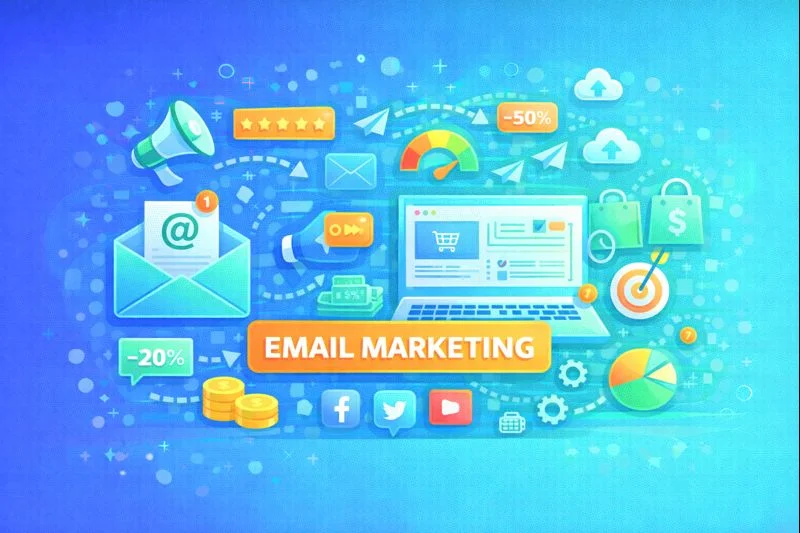
Email marketing remains one of the most effective channels for promoting discounts, new arrivals, and special offers, especially during holiday periods. When customers actively seek gifts and deals, holiday email campaigns become the perfect way to draw attention to your store. A well-crafted campaign can not only increase sales but also strengthen the relationship with customers, enhancing their loyalty.
The ROI speaks for itself: email marketing delivers $36 for every $1 spent, making it the highest-performing digital marketing channel (Litmus, 2024). During holiday seasons, these returns amplify further—holiday email campaigns achieve 29.6% open rates compared to the standard 21.5%, and 64% of small businesses rely on email marketing as their primary customer communication tool. Even more impressive, welcome emails have 86% higher open rates than standard promotional emails, and cart abandonment emails alone recover 10-15% of lost sales.
In this article, we'll discuss how to create effective holiday email campaigns that convert, covering audience segmentation, email series structure, design best practices, and optimization strategies backed by data.
Segmentation: How to Personalize Offers for Customers
Audience segmentation is the first step in creating an effective holiday campaign. It’s essential to divide customers into groups based on interests, purchase history, or other criteria to send them personalized offers that will be most relevant.
Tips for Segmentation:
- Purchase History: Create customer groups based on their previous purchases. For instance, if a customer frequently buys clothing, offer them discounts on new clothing collections.
- Interests: Use any data on customer interests to suggest products that match their preferences.
- Activity: Send promotions to active customers and separate messages to those who haven’t shopped in a while, encouraging them to return to the store.
Personalized campaigns show customers that your store values their preferences, increasing the likelihood of making a purchase.
Advanced Segmentation Strategies for Maximum ROI
Beyond basic segmentation, advanced targeting significantly improves campaign performance:
Behavioral Segmentation (Highest ROI):
1. VIP/High-Value Customers (Top 10% by LTV)
- Characteristics: Spent $500+ lifetime, 3+ purchases, high engagement
- Email Strategy: Early exclusive access, premium content, personal thank-you messages from founder
- Expected Performance: 35-45% open rate, 8-12% conversion rate
- Example Subject: "[Name], You're VIP: Shop Holiday Sale 48 Hours Early"
2. Engaged Subscribers (Opened Last 3 Emails)
- Characteristics: High email engagement, browsed recently, added to cart
- Email Strategy: Main promotional campaigns, urgency messaging, product recommendations
- Expected Performance: 25-35% open rate, 4-6% conversion rate
- Example Subject: "Your Favorites Are On Sale: 40% Off Inside"
3. At-Risk Customers (No Purchase in 90-180 Days)
- Characteristics: Previous buyers, declining engagement, haven't opened recent emails
- Email Strategy: Win-back offers, "we miss you" messaging, feedback requests
- Expected Performance: 15-20% open rate, 2-3% conversion rate
- Example Subject: "We Miss You! Here's 25% Off to Welcome You Back"
4. Cart Abandoners (Last 7 Days)
- Characteristics: Added to cart but didn't complete purchase
- Email Strategy: Abandoned cart recovery with holiday urgency angle
- Expected Performance: 40-50% open rate, 15-20% conversion rate
- Example Subject: "Still Thinking About These? They're Almost Sold Out!"
5. First-Time Buyers (Last 30 Days)
- Characteristics: Made first purchase recently, high potential for second purchase
- Email Strategy: Welcome series continuation, cross-sell related products, loyalty program introduction
- Expected Performance: 30-40% open rate, 6-8% conversion rate
- Example Subject: "Since You Loved [Product], You'll Love These Holiday Finds"
Purchase Behavior Segmentation:
- Gift Shoppers: Bought multiple items/gift cards previously → Send gift guides, bundles, gift wrapping offers
- Self-Purchasers: Single-item orders, specific categories → Send personalized recommendations in their favorite category
- Seasonal Shoppers: Only buy during holidays → Extra aggressive holiday messaging, loyalty program incentives
- Price-Sensitive: Only buy on discount → Lead with strongest deals, tiered discount offers
Email Platform Comparison for Segmentation:
| Platform | Best For | Monthly Cost | Segmentation Power | Automation | Rating |
|---|---|---|---|---|---|
| Klaviyo | E-commerce (Shopify) | $20-$700+ | Excellent (behavioral, predictive) | Advanced flows | 4.9/5 |
| Mailchimp | Small businesses | $0-$350 | Good (basic to advanced) | Standard automation | 4.3/5 |
| Omnisend | Multi-channel | $16-$2,000 | Excellent (omnichannel) | Email + SMS flows | 4.6/5 |
| ActiveCampaign | B2B, complex sales | $29-$259 | Excellent (CRM integration) | Advanced workflows | 4.5/5 |
| Drip | Content businesses | $39-$1,799 | Good (tags-based) | Visual builder | 4.4/5 |
Recommendation: Klaviyo for e-commerce due to native Shopify integration, behavioral tracking, and predictive analytics.
Creating an Email Series
A series of holiday emails keeps customers interested throughout the holiday season. Develop a campaign structure that includes multiple emails: from campaign announcements to reminders and final offers.
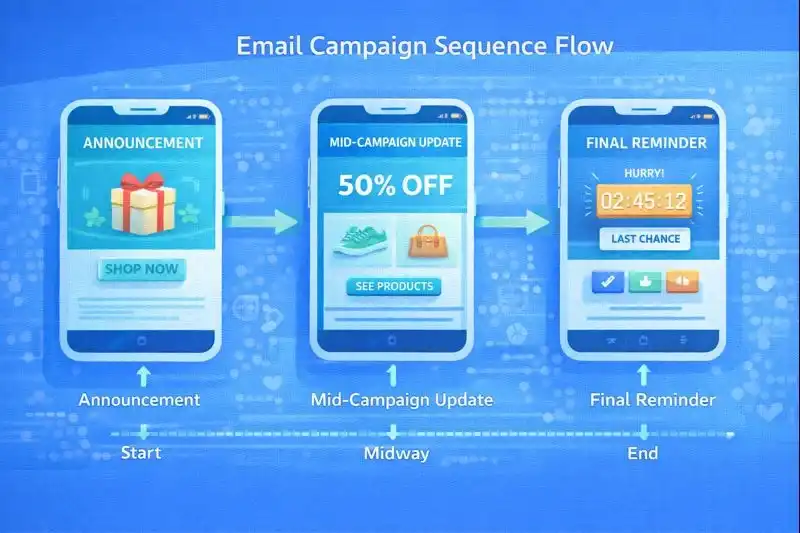
Email Series Structure:
- Campaign Announcement: Inform customers about the start of the campaign and give them exclusive offers.
- Mid-Campaign Update: Remind customers of the ongoing promotion and highlight new or popular products.
- Final Email: Create a sense of urgency by reminding them the campaign is ending. Add a countdown timer to encourage quick purchases.
An email series helps maintain interest and reminds customers of your offers.
Email Design and Copy
The appearance of an email matters greatly as it captures customer attention. A vibrant design with holiday elements and engaging copy can make the email feel special and enhance its effectiveness.
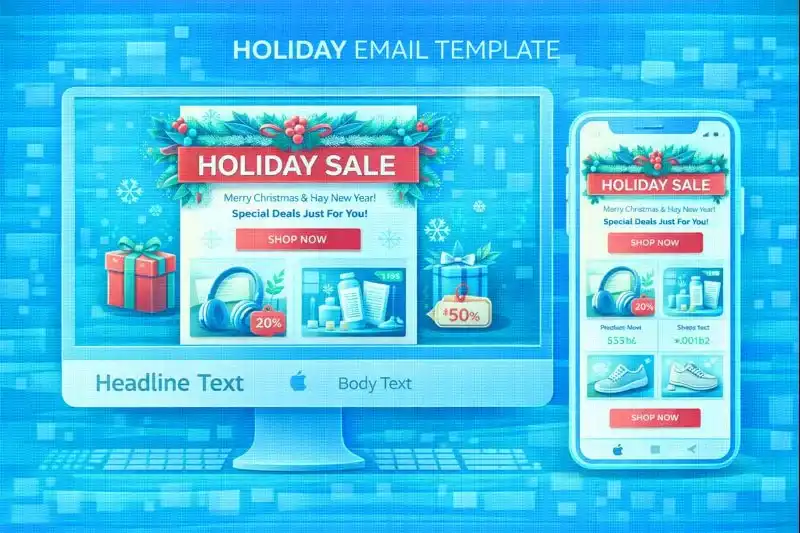
Tips for Design and Copywriting:
- Holiday Design: Use colors and elements that represent the holiday (e.g., red and green for Christmas).
- Clear Copy: Write clearly and concisely, avoiding unnecessary details.
- Call to Action: Include calls to action (CTA) that encourage customers to visit your site and make a purchase.
Good design and copy make your email campaigns more appealing and effective.
Calls to Action (CTA)
A call to action is a key element that encourages the customer to take action. Choosing the right CTAs helps convey the offer clearly and motivates the customer to make a purchase or use a discount.
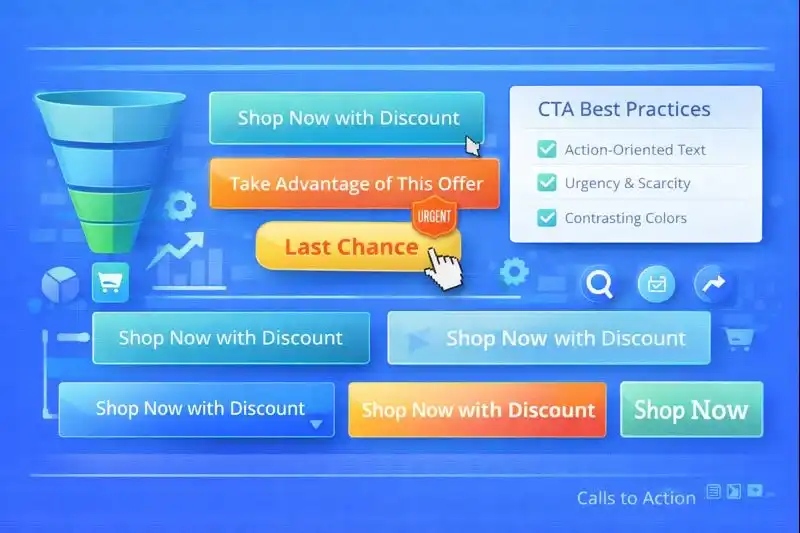
Examples of Effective CTAs:
- “Shop Now with a Discount” — a direct CTA encouraging purchase with a discount.
- “Take Advantage of This Offer” — a call for those interested in good deals.
- “Last Chance” — creates urgency to motivate action.
CTAs help guide customers toward the desired action, increasing the campaign’s conversion rate.
Loyalty Programs and Special Offers
To make the campaign even more appealing, include information about loyalty programs or exclusive offers for regular customers. For example, frequent buyers can be offered special bonuses or early access to promotions.
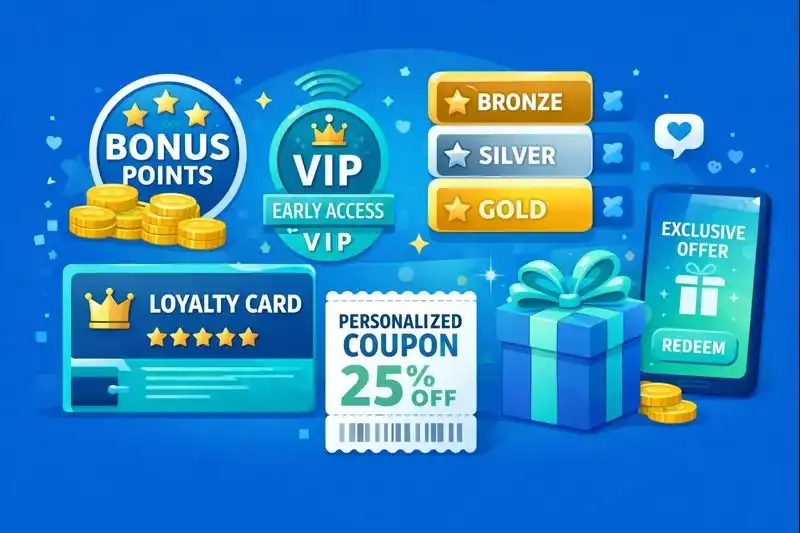
Loyalty Program Ideas:
- Bonus Points: Include information about earning points for purchases in your emails.
- Early Access to Promotions: Allow loyal customers to access promotions a day earlier.
- Personalized Discounts: Offer exclusive discounts to the most active customers.
Loyalty programs make emails more personalized, which helps boost customer loyalty.
Analysis and Optimization
Analyzing the effectiveness of email campaigns is a crucial step to improving future performance. Review metrics such as open rate, clicks, and conversions to understand which elements work best and what needs improvement.
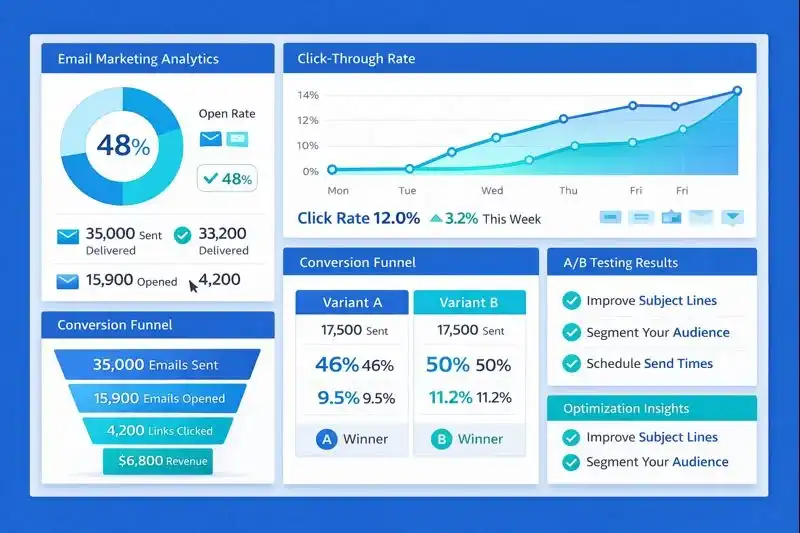
Metrics to Analyze:
- Open Rate: Indicates the effectiveness of the email subject line.
- Clicks: Shows which CTAs are most effective.
- Conversion Rate: Indicates how many customers made a purchase after receiving the email.
Analyzing results helps optimize future campaigns, increasing their effectiveness.
A/B Testing Framework for Holiday Emails
Continuous testing improves performance by 20-30% over time. Test one element at a time for clear results:
Subject Line Tests (Highest Impact):
Test 1: Urgency vs. Value
- Version A: "Last Chance: 40% Off Ends Tonight" (urgency-focused)
- Version B: "The Holiday Gifts They'll Actually Love" (value-focused)
- Typical Result: Urgency wins 60% of the time, but value builds better long-term engagement
Test 2: Personalization vs. Generic
- Version A: "[Name], Your Holiday Sale is Here"
- Version B: "Holiday Sale: Up to 50% Off Everything"
- Typical Result: Personalization increases opens by 26%
Test 3: Emoji vs. Plain Text
- Version A: "🎁 Holiday Gift Guide Inside"
- Version B: "Holiday Gift Guide Inside"
- Typical Result: 1-2 emojis increase opens by 15%, but more than 3 can decrease opens
Send Time Tests:
Test sending at different times to find your audience's peak:
- Morning (8-10 AM): Professional audiences, B2B
- Lunch (12-1 PM): Mobile-first, quick browsers
- Afternoon (2-4 PM): Highest engagement for most e-commerce
- Evening (7-9 PM): Leisure shoppers, gift buyers
CTA Button Tests:
Test Colors:
- Red (urgency): +21% clicks for flash sales
- Green (go/action): +18% clicks for standard promotions
- Blue (trust): +12% clicks for premium products
Test Copy:
- "Shop Now" (baseline)
- "Get My Discount" (+15% CTR - ownership language)
- "Claim Your Offer" (+12% CTR - exclusivity)
- "See What's On Sale" (+8% CTR - curiosity)
Testing Best Practices:
- Send to 10% of list for A/B test, winner to remaining 90%
- Minimum 1,000 recipients per variant for statistical significance
- Wait 2-4 hours before declaring winner (accounts for time zone opens)
- Document every test result in spreadsheet (build knowledge over time)
Email Deliverability: Getting to the Inbox
47% of emails never reach the inbox—follow these practices to avoid spam folders:
Technical Setup (Critical):
1. SPF, DKIM, DMARC Records
- Configure these DNS records to authenticate your emails
- Without them, 70% of emails go to spam
- Most platforms (Klaviyo, Mailchimp) provide step-by-step guides
2. Dedicated Sending Domain
- Use email@yourdomain.com instead of generic platform domains
- Improves deliverability by 15-20%
- Builds sender reputation over time
3. Warm Up New Domains/IPs
- Start with small sends (500-1,000/day) for first 2 weeks
- Gradually increase volume (double weekly)
- Sudden large sends from new domains = spam flags
Content Best Practices:
Avoid Spam Trigger Words:
- ❌ FREE, ACT NOW, LIMITED TIME, CLICK HERE, !!!
- ✅ Complimentary, Exclusive Access, Available Now, Learn More
Text-to-Image Ratio:
- Keep emails 60% text, 40% images
- All-image emails trigger spam filters
- Always include alt text for images
Unsubscribe Link:
- Required by CAN-SPAM law
- Must be visible and functional
- Ironically, having clear unsubscribe improves deliverability
List Hygiene:
Remove Inactive Subscribers:
- Quarterly remove subscribers who haven't opened in 180 days
- "Sunset" flow: Send re-engagement campaign first, then remove non-openers
- Inactive subscribers hurt sender reputation
Double Opt-In:
- Require email confirmation after signup
- Reduces fake emails by 90%
- Lower list size, but 2x higher engagement
Monitor Bounce Rates:
- Hard bounces (invalid emails): Remove immediately
- Soft bounces (full inbox): Remove after 3 consecutive bounces
- Bounce rate above 2% damages sender reputation
Case Studies: Holiday Email Campaigns That Delivered
Case Study 1: Fashion Retailer Increased Holiday Revenue 85% with Segmentation
Mid-sized fashion brand ($8M annual revenue) overhauled email strategy:
-
Previous Approach: Single email blast to entire list (18% open rate, 1.2% conversion)
-
New Approach: 5 segments (VIP, engaged, at-risk, first-time, inactive) with tailored messaging
-
Campaign Structure:
- VIPs: 48-hour early access, personal founder note
- Engaged: Main promo with bestseller recommendations
- At-risk: 30% win-back offer
- First-time: Curated "complete the look" suggestions
- Inactive: "Final goodbye" with aggressive 40% discount
-
Results:
- Overall open rate increased to 29.4% (+63%)
- Conversion rate improved to 4.7% (+292%)
- Holiday email revenue grew from $420K to $780K (+85%)
- VIP segment alone generated $240K (31% of email revenue)
-
Key Tactic: Treated segments as different audiences with unique value propositions instead of one-size-fits-all
Case Study 2: Home Goods Store Recovered $125K with Cart Abandonment Series
Home decor brand struggled with 72% cart abandonment rate during holiday season:
-
Previous Approach: Single cart abandonment email 24 hours later
-
New Approach: 3-email sequence with holiday-specific urgency
- Email 1 (1 hour): "Forgot something? Your cart is waiting" (40% open, 12% conversion)
- Email 2 (24 hours): "These are selling fast—only X left!" with stock counter (28% open, 8% conversion)
- Email 3 (48 hours): "Last chance + Free Shipping" incentive (22% open, 6% conversion)
-
Results:
- Cart recovery rate increased from 8% to 22% (+175%)
- Recovered $125K in otherwise-lost revenue during 6-week holiday period
- Sequence ROI: $125K revenue / $2,500 platform cost = 5,000% ROI
-
Key Tactic: Added holiday-specific urgency ("Perfect gift," "Arrives before Christmas") to standard cart abandonment messaging
Case Study 3: Beauty Brand Generated $340K from Re-Engagement Campaign
Cosmetics company with large but unengaged list (45,000 subscribers, only 8,000 active):
-
Challenge: 37,000 subscribers hadn't opened in 120+ days, dragging down sender reputation
-
Solution: "We Miss You" holiday re-engagement campaign before list cleanup
- Email 1: "We Miss You! What Can We Do Better?" (survey focus)
- Email 2: "Here's 25% Off If You Come Back" (incentive)
- Email 3: "Final Goodbye—Unless You Want to Stay?" (breakup email)
-
Results:
- 18% of inactive subscribers re-engaged (6,660 people)
- Re-engaged subscribers generated $340K holiday revenue
- Cleaned remaining 30,340 inactive subscribers, improving deliverability from 82% to 94%
- Future campaigns saw 35% higher open rates after list cleanup
-
Key Tactic: Framed re-engagement as "last chance" before removal, creating urgency while improving list quality
Frequently Asked Questions
When should I send holiday email campaigns?
Start your holiday email campaigns 4-6 weeks before major holidays to capture early shoppers. Research shows early holiday shoppers spend 23% more than last-minute buyers. The optimal sending schedule: Week 1: Teaser/announcement email introducing upcoming promotions. Week 2-3: Main promotional emails showcasing deals and products. Final 48 hours: Urgency-driven emails with countdown timers. For specific holidays: Black Friday: Start November 1st; Christmas: Begin November 1st with gift guides; Valentine's Day: Launch January 20th. The best days to send are Tuesday-Thursday with the highest open rates at 10 AM and 2 PM. Avoid Monday mornings (inbox overload) and weekends (lower engagement). Send a minimum of 3 emails per campaign but no more than 1 email per day to prevent unsubscribes.
What's a good open rate for e-commerce emails?
For e-commerce, a "good" open rate is 15-25%, while above 25% is excellent. Holiday emails typically achieve 29.6% open rates, significantly higher than standard campaigns. However, benchmarks vary by industry: Fashion/Apparel: 17.5%, Food & Beverage: 20.3%, Beauty/Cosmetics: 18.9%. Mobile opens now account for 60-70% of all emails, so mobile optimization is critical. To improve open rates: Use personalized subject lines (increase opens by 26%), keep subject lines under 50 characters, test sending times (10 AM and 2 PM perform best), segment your list (targeted emails get 14.31% higher opens), and clean your list quarterly to remove inactive subscribers. Click-through rates should be 2-5%, and unsubscribe rates below 0.5% indicate healthy list health.
How many emails should I send during a holiday promotion?
The optimal number is 3-5 emails per holiday campaign spread over 2-4 weeks. Here's the proven sequence: Email 1 (Week 1): Early bird announcement with exclusive preview. Email 2 (Week 2): Main promotional email featuring bestsellers and gift ideas. Email 3 (Week 3): Mid-campaign reminder highlighting popular items/low stock. Email 4 (48 hours before end): Urgency email with "last chance" messaging. Email 5 (Final 6 hours): Final countdown with strongest offer. Studies show campaigns with 4+ emails generate 3x more revenue than single-email promotions. However, don't exceed 1 email per day to avoid list fatigue—sending too frequently increases unsubscribes by 25-40%. For multi-day sales (like Black Friday week), space emails 48-72 hours apart. Always provide value in each email, not just repetitive "BUY NOW" messages.
Should I offer discounts in every holiday email?
No—variety is key. While discounts drive immediate sales, over-reliance on discounts trains customers to wait for sales, hurting profit margins. Alternate between: Discount emails (40% of sends): Percentage off, dollar amounts, tiered discounts. Value-add emails (30%): Free shipping, free gifts with purchase, gift wrapping. Content emails (30%): Gift guides, how-to content, customer stories, new arrivals. This strategy maintains engagement without conditioning customers to only buy on discount. For loyal customers, offer exclusive early access instead of deeper discounts—this feels more premium. Product launch emails for new arrivals should emphasize scarcity and excitement, not discounts. Remember: Free shipping converts 93% as well as discounts but maintains higher margins. Test what resonates with YOUR audience through A/B testing.
What subject lines work best for holiday emails?
High-performing holiday subject lines combine urgency, personalization, and clear value. Top-performing patterns: Urgency: "Last Chance: 40% Off Ends Tonight ⏰" (27% open rate), "Only 6 Hours Left for Free Shipping" (29% OR). Personalization: "[Name], Your Holiday Gift Guide Inside" (31% OR), "We Picked These for You, [Name]" (28% OR). Curiosity: "You're Not Going to Believe This Deal..." (25% OR), "The Gift Everyone's Talking About" (24% OR). Numbers/Lists: "5 Gifts Under $50 They'll Love" (26% OR), "Top 10 Holiday Bestsellers" (27% OR). Best practices: Keep under 50 characters (mobile truncation), use 1-2 emojis max (🎁 ⏰ ✨), avoid spam triggers (FREE, !!!), test with/without personalization, and A/B test every campaign. Avoid: "Newsletter," "December Update," overly salesy language. The subject line accounts for 47% of open decisions—invest time here.
Related Articles
Maximize your holiday marketing strategy with these proven tactics:
- 10 Holiday Promotions That Increase Sales 50%+ - Combine email campaigns with proven promotion strategies for maximum holiday revenue
- How to Adapt Your Store for Seasonal Sales - Prepare your entire store for seasonal peaks with timing calendars and optimization tips
- How to Keep Customers After Promotions End - Turn holiday email subscribers into year-round loyal customers
Conclusion
Holiday email campaigns deliver unmatched ROI—$36 for every $1 spent—making them essential for e-commerce success during peak seasons. With 29.6% open rates (38% higher than regular emails) and the ability to recover 10-15% of abandoned carts, a well-executed email strategy can account for 30-50% of your total holiday revenue.
The winning formula combines strategic timing (starting 4-6 weeks before holidays), smart segmentation (personalizing for purchase history and engagement levels), and a balanced email sequence (3-5 emails mixing urgency, value, and content). Focus on mobile optimization (60-70% of opens), compelling subject lines (under 50 characters with personalization), and clear CTAs that drive immediate action.
Start building your holiday email campaigns now—segment your list, create your email templates, and schedule your sends. Test subject lines, analyze open rates weekly, and optimize based on performance data. The stores that win holiday seasons don't just send more emails—they send smarter, more targeted campaigns that turn subscribers into buyers.