
Introduction
Valentine's Day is one of the most popular holidays when people choose gifts for loved ones. It's a time when customers actively search for something special to express their feelings. For stores, this is a unique opportunity to boost sales, attract new customers, and strengthen relationships with loyal buyers by offering attractive discounts and promotions.
The numbers prove Valentine's Day is a major revenue opportunity: $25.8 billion in total spending projected for Valentine's Day 2025 (National Retail Federation), with 52% of Americans planning to celebrate. Average spending per person reaches $185.81, distributed across jewelry (21%), flowers (37%), candy (52%), and cards (40%). Perhaps most importantly, 59% of shoppers start their Valentine's shopping 2+ weeks early, creating an extended sales window that rewards stores who launch campaigns in late January rather than waiting until February 10th.
This article provides a comprehensive Valentine's Day marketing playbook covering gift categorization, promotion strategies, timing optimization, and last-minute tactics to maximize February revenue and customer acquisition.
Creating a “Gift Ideas” Section
One of the simplest yet most effective ways to assist customers in their shopping is by creating a “Gift Ideas” section. This section can be broken down into subcategories to make the selection even easier, such as gifts for men, women, loved ones, friends, or colleagues.

Tips for Creating the Section
- Curate a selection of unique products for men and women.
- Add recommendations by price range so customers can easily find suitable options.
- Feature popular products or exclusive offers.
Such sections simplify the selection process and encourage customers to buy multiple items at once.
Valentine's Day Shopping Behavior by Demographic
Understanding who shops when helps target campaigns effectively:
Early Planners (Jan 20-Feb 7) - 59% of Shoppers:
- Demographics: Women aged 25-44, high-income professionals
- Spending: $200+ average (higher than late shoppers)
- Product Preferences: Jewelry, luxury items, personalized gifts, experiences
- Marketing Strategy: Premium positioning, early bird incentives, "avoid sold-out disappointment" messaging
Last-Minute Shoppers (Feb 8-13) - 41% of Shoppers:
- Demographics: Men aged 18-34, younger professionals
- Spending: $150-180 average (still substantial)
- Product Preferences: Gift cards, flowers, candy, express gifts
- Marketing Strategy: "Still have time," expedited shipping, digital gifts, in-store pickup
By Gender:
- Women (51% of buyers): Plan earlier, buy for partners + kids + friends, spend on experiences and personalized items
- Men (49% of buyers): Shop closer to Feb 14, focus on partner only, prefer jewelry and flowers
By Age:
- 18-24: Budget-conscious ($85 average), favor candy and cards
- 25-34: Highest spenders ($245 average), buy jewelry and experiences
- 35-54: Balanced spending ($190 average), prefer traditional gifts
- 55+: Lower spending ($130 average), focus on sentiment over price
Valentine's Day Marketing Timeline (6-Week Strategy)
Week 1-2 (Jan 20-Feb 2): Early Bird Phase
Email Campaign:
- Subject: "Valentine's Day Preview: Shop First, Stress Less"
- Content: Gift guides by recipient type, early bird discount (10-15% off)
- Send to: VIP customers, engaged subscribers
Website:
- Launch Valentine's Day landing page
- Create gift categories (For Her, For Him, For Friends, Under $50, Luxury)
- Add "Arrives by Feb 14" shipping countdown
Social Media:
- Post gift inspiration content daily
- Run "Show Your Love" UGC campaign with hashtag
- Partner with 3-5 micro-influencers for gift ideas
Budget Allocation: 20% of total Valentine's budget
Week 3 (Feb 3-9): Main Campaign Push
Email Campaign:
- Main promotional blast to entire list
- Abandoned cart reminders with "Order by Feb 11 for delivery" urgency
- Segmented recommendations based on past purchases
Website:
- Homepage takeover with Valentine's hero banner
- Add "Best Sellers" and "Trending Gifts" sections
- Implement exit-intent popup with 15% discount
Social Media:
- Increase posting frequency to 2-3x daily
- Run paid ads targeting lookalike audiences
- Daily Stories with product spotlights and customer testimonials
Budget Allocation: 50% of total Valentine's budget (peak period)
Week 4 (Feb 10-13): Last-Minute Rush
Email Campaign:
- "Last Chance" emails with countdown timers
- Digital gift card promotion ("Instant delivery")
- Express shipping available messaging
Website:
- Add "Ships Today" filter to product pages
- Promote digital products (gift cards, subscriptions, courses)
- Display "Order in next 2 hours for same-day shipping"
Social Media:
- Multiple daily posts with urgency messaging
- Sponsored posts targeting men aged 25-44 (primary last-minute shoppers)
- Instagram Stories with swipe-up shop links
Budget Allocation: 25% of total Valentine's budget
Feb 14-15: Day-Of and Post-Valentine
- Thank you email to all customers who purchased
- "Forgot someone?" follow-up promotion (Galentine's Day angle)
- Clear remaining inventory with 30-40% discount
- Survey customers about gift satisfaction
Budget Allocation: 5% (clearance phase)
Discounts on Sets and Gift Certificates
Valentine’s Day is an ideal time to introduce special promotions on sets of products, which provide good value and help customers choose ready-made gifts. For instance, perfume, cosmetic kits, jewelry, or gift certificates.

How to Implement This
- Offer small discounts on bundles so customers gain value by purchasing several items together.
- Offer gift certificates as an option if the customer is unsure of what to choose.
- Add bonuses or discounts on future purchases for those buying gift certificates.
This allows customers to spend more while receiving additional value in return.
Valentine’s Day Store Decor
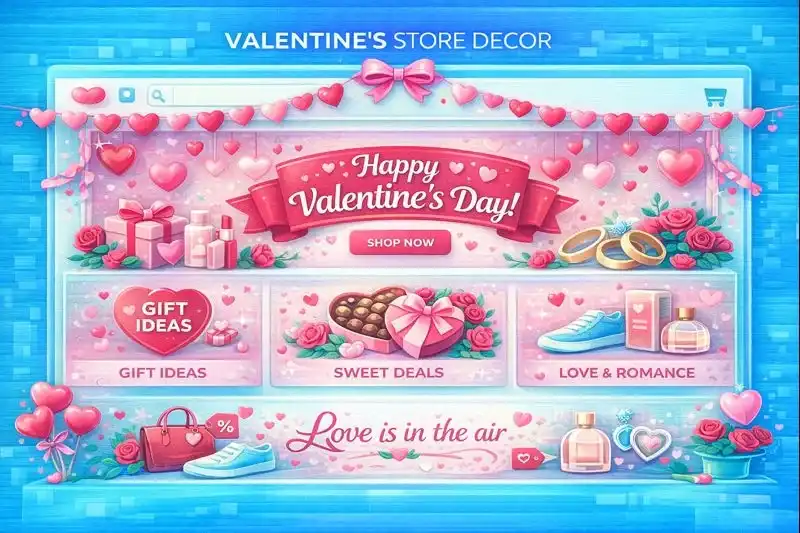
Decorating your store in a Valentine’s Day theme will create a romantic atmosphere that captures customer attention. Use red, pink, and white colors, hearts, flowers, and romantic quotes to make the store more appealing and set a buying mood.
Decor Ideas for Online and Physical Stores
- Add romantic elements to your website’s homepage.
- Decorate the physical store: balloons, flowers, candles, or plush toys make perfect additions.
- Create displays with products suitable for Valentine’s Day gifts.
Decor brings the festive feeling and draws extra attention to your products.
Social Media Posts
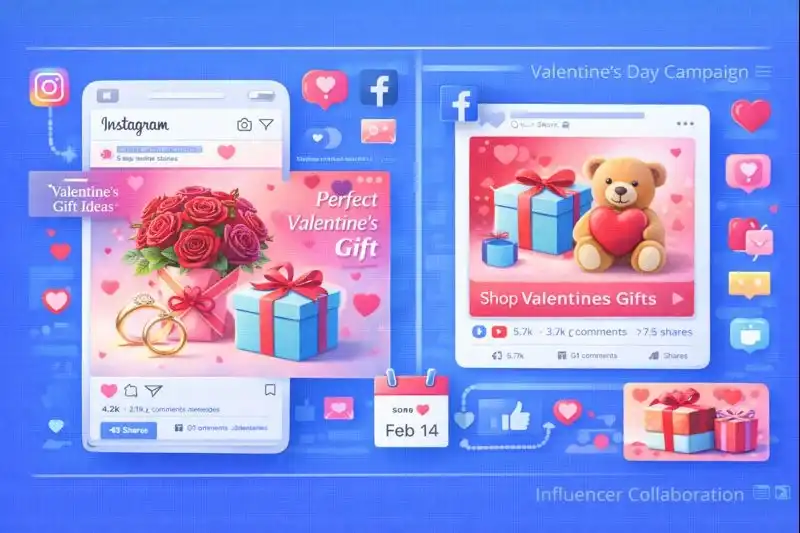
Social media advertising is an easy and quick way to reach potential customers with information about your promotions and offers. Valentine’s Day is a great opportunity to create unique posts that highlight your holiday discounts or other offers.
Content Ideas
- Share stories about romantic gift ideas.
- Create a series of posts with gift ideas for different groups.
- Use bright, attractive images symbolizing love and warm feelings.
Effective social media advertising will help raise brand awareness and attract new customers.
Love-Inspired Delivery
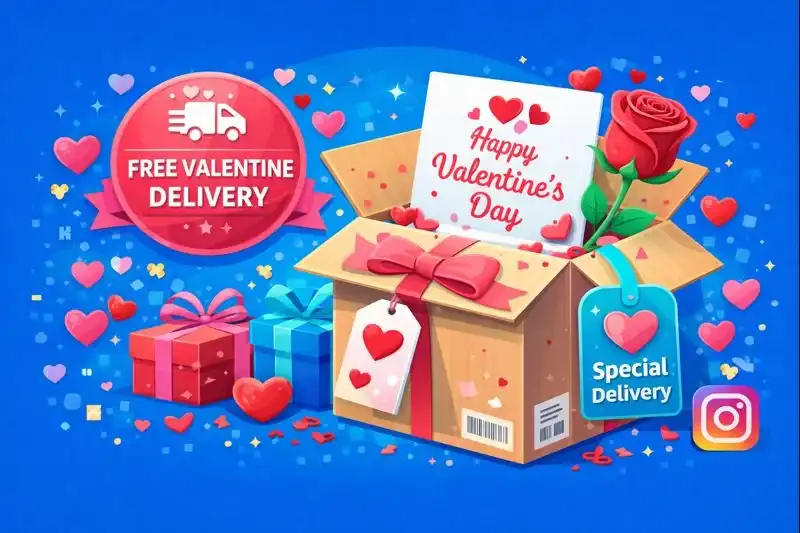
Make the delivery process special by adding Valentine’s Day cards, small flowers, or greeting notes to the package. This can be a pleasant surprise that leaves the customer satisfied and creates positive emotions associated with your brand.
How to Implement This
- Offer free shipping or discounted delivery for purchases made for Valentine’s Day.
- Create unique packaging that reminds customers of the holiday.
- Include small Valentine’s cards or chocolates in the package to leave a positive impression.
This helps build a positive brand image and encourages customers to return in the future.
Limited Offers and Countdown Timers
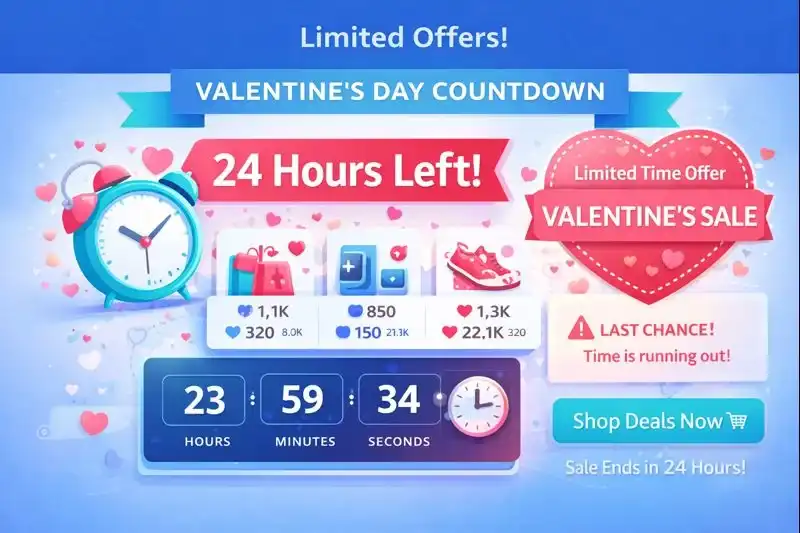
Nothing motivates customers to purchase more than a limited-time offer. Use countdown timers to display the time remaining for the promotion, creating a sense of urgency.
Tips for Using Timers
- Add a timer to the page with promotional items so customers feel the urgency.
- Use clear and attractive banners that grab attention.
- Offer special discounts or gifts for purchases made during this period.
This simple but effective strategy encourages customers to make a purchase immediately.
Last-Minute Shopper Conversion Tactics
41% of Valentine's shoppers wait until the last week—capture this revenue with tactical strategies:
Digital-First Product Strategy:
Instant Delivery Options:
- E-Gift Cards: Highlight "Delivered in 5 minutes" messaging
- Digital Subscriptions: Streaming services, meal kits, online courses
- Virtual Experiences: Cooking classes, wine tastings, online concerts
- Printable Certificates: "Print at home" spa packages, dinner vouchers
Same-Day/Next-Day Shipping:
- Partner with local couriers for Feb 13-14 delivery
- Charge premium ($25-35) for guaranteed Valentine's Day delivery
- Display "Order in next [X] hours for Feb 14 delivery" countdown
- Offer free same-day for orders $150+ (incentivizes higher AOV)
In-Store Pickup (BOPIS - Buy Online, Pick Up In-Store):
- "Ready in 2 hours" messaging for local customers
- Reserve online, pick up Feb 13-14 without shipping anxiety
- Upsell with "grab these add-ons" at pickup (cards, candy, flowers)
Last-Minute Product Curation:
Create dedicated "Ships Today" or "Ready Now" collection featuring:
- Items in stock at fulfillment center closest to customer
- Lightweight items (faster shipping)
- Digital products
- Gift cards with custom messaging
- "Pairs well with..." cross-sell suggestions
Emergency Gift Guide:
Create landing page: "Forgot Valentine's Day? We've Got You Covered"
- Gift ideas by price point ($25, $50, $100, $200+)
- "Safe bet" options (flowers, chocolate, jewelry, spa)
- Include user reviews emphasizing "saved me!" sentiments
Valentine's Day Case Studies
Case Study 1: Jewelry Brand Increased Valentine's Revenue 127% with Segmented Gifting
Small jewelry brand ($2M revenue) implemented demographic-specific campaigns:
-
Challenge: Previous Valentine's campaigns treated all customers the same, achieving $85K revenue
-
Strategy:
- For Women (Self-Purchase + Gifting Friends): "Treat Yourself" campaign with matching friend sets, launched Jan 20
- For Men (Partner Gifts): "She'll Love This" gift guide with sizing help, launched Feb 5
- For Couples: "Matching Pair" bundle discounts
-
Results:
- Women's self-purchase segment generated $75K (was $20K)
- Men's gift segment generated $95K (was $55K)
- Couples segment generated $23K (new revenue stream)
- Total Valentine's revenue: $193K (+127% vs $85K previous year)
-
Key Tactic: Recognized women buy Valentine's gifts too, not just men—doubled addressable market
Case Study 2: Home Goods Store Captured $68K from Last-Minute Shoppers
Home decor brand with long shipping times (5-7 days) adapted for procrastinators:
-
Challenge: Lost sales to Amazon due to shipping limitations in final week
-
Solution:
- Introduced e-gift cards with custom designs (instant delivery)
- Partnered with local courier for same-day delivery in 3 major cities
- Created "Digital Room Makeover Consultation" gift (virtual service, instant delivery)
-
Results:
- Feb 10-14 revenue increased from $15K to $68K (+353%)
- Gift card sales: $32K (47% of last-minute revenue)
- Same-day delivery (despite $30 fee): $24K
- Digital consultation: $12K (new offering, continued post-Valentine's)
-
Key Tactic: Turned shipping disadvantage into digital opportunity
Case Study 3: Beauty Brand Extended Valentine's Season with "Galentine's" Strategy
Cosmetics company realized Feb 14 isn't the only opportunity:
-
Strategy:
- Traditional Valentine's (Feb 1-14): Partner-focused gifts, romantic packaging
- Galentine's Day (Feb 13-15): "Treat Your Besties" campaign targeting friend groups
- Post-Valentine (Feb 15-20): "You Deserve Love Too" self-care discount
-
Results:
- Traditional Valentine's: $120K (baseline)
- Galentine's extension: $45K additional (female friend gifting)
- Self-love post-Valentine: $28K (clearance + self-purchase)
- Total February revenue: $193K vs $120K previous year (+61%)
-
Key Tactic: Extended single-day holiday into 3-week revenue opportunity
Frequently Asked Questions
When should I start my Valentine's Day promotion?
Start your Valentine's Day campaign January 20th (3.5 weeks before February 14th) to capture early shoppers who spend 23% more than last-minute buyers. Campaign timeline: January 20-27: Teaser emails and social posts ("Valentine's Gift Guide Coming Soon"), early access for loyalty members. January 28 - February 3: Full campaign launch with gift guides, promotions, email blasts. February 4-10: Mid-campaign push highlighting bestsellers, "popular items selling fast" messaging. February 11-13: Final urgency campaign: "Last chance for delivery by Valentine's Day," expedited shipping options. February 14: Same-day/last-minute gift ideas (e-gift cards, digital products). Critical dates: Launch before February 1st to avoid inbox saturation—most competitors launch February 1-5, creating noise. 59% of shoppers start browsing 2+ weeks early, so January 20th campaigns capture this high-intent, high-spending audience before they commit elsewhere. After Valentine's Day, run February 15-20 clearance on Valentine's inventory at 40-60% off to liquidate stock.
What products sell best for Valentine's Day?
Top-selling categories with purchase percentages: Candy/Chocolate: 52% (highest volume, lowest margin—use as add-on). Flowers: 37% (time-sensitive, requires delivery coordination). Greeting Cards: 40% (low value but high attach rate). Jewelry: 21% (highest margin, average spend $250+). Clothing/Accessories: 21% (lingerie, ties, scarves). Gift Cards: 19% (last-minute savior, pure profit). Dinner/Experiences: 34% (restaurant gift cards, spa packages). Best strategy by store type: Fashion: Lingerie, accessories, "date night outfits" (bundle dress + shoes + clutch). Home Goods: Candles, bedding sets, romantic decor. Beauty: Perfume/cologne sets, spa gift baskets, couples' skincare. Food: Gourmet chocolate, wine/champagne gift sets, cooking class kits. Jewelry: Necklaces, bracelets, personalized pieces. Create bundles combining high-margin + high-volume items: "Chocolate + Jewelry" or "Flowers + Card + Teddy Bear" increases AOV by 30-45%.
Should I target men, women, or both for Valentine's marketing?
Target both, but with different messaging and timing. Spending breakdown: Men spend $339 on average (higher budget, less planning, purchase closer to February 14th). Women spend $64 on average (more thoughtful gifts, earlier planning, often reciprocal). Marketing strategy: For male shoppers (60% of revenue): Launch later (February 1-5), emphasize "She'll love this" messaging, create "Gift Guides for Her," highlight free gift wrapping/delivery, use urgency ("Don't wait until it's too late"), feature jewelry, flowers, chocolates prominently. For female shoppers (40% of revenue): Launch earlier (January 20), emphasize thoughtfulness and personalization, create "Gift Guides for Him," feature experiences and practical luxury items (watches, grooming kits), use emotion-driven copy. Don't forget: 27% of people buy gifts for non-romantic relationships (friends, family, pets, self-gifts). Create "Galentine's Day" (February 13th) content targeting female friendships, "Treats for Yourself" self-care messaging, and pet Valentine's gift ideas. Multi-audience approach generates 35% more revenue than male-only targeting.
What discount percentage works for Valentine's sales?
Valentine's Day is gift-value focused, not discount-driven, so 15-25% discounts perform best while preserving margins. Unlike Black Friday (40-70% expected), Valentine's shoppers prioritize sentiment over savings. Discount strategy: 15-20% sitewide: Baseline promotional expectation. 25-30% on specific categories: Jewelry, lingerie, premium items (still maintains healthy margin). Free shipping threshold: "Free shipping on orders $50+" (93% as effective as percentage discount). Value bundles: "2 for $X" or "Buy perfume, get candle free" (increases AOV without devaluing individual items). Alternatives to discounts: Free gift wrapping (high perceived value, low cost), Free greeting card with purchase, Upgraded shipping (standard → express for free), Gift with purchase ($100+ orders get luxury sample). Tiered approach: "Spend $75 get 15% off, spend $150 get 25% off + free express shipping" incentivizes larger orders. Important: Jewelry should never exceed 25% discount—deeper discounting signals low quality. Flowers/candy can go 30-40% off as commoditized categories.
How do I market to single people on Valentine's Day?
Tap into the $6 billion "self-gifting" and "anti-Valentine's" market with these strategies: "Treat Yourself" Campaigns: Position Valentine's as self-love day. "Love Yourself First" messaging, spa products, luxury self-care items, comfort foods, wine/cocktail kits. Galentine's Day (February 13th): Female friendship celebration—gift sets for friends, group experiences, "Squad Goals" product bundles. "Singles Awareness Day" (February 15th): Humorous, empowering messaging. Discounted chocolate and flowers (clear Valentine's inventory). Pet Valentine's: 27% of pet owners buy Valentine's gifts for pets—dog treats, toys, matching owner-pet items. Platonic gift options: Friend gifts, family appreciation, teacher/coworker gifts (non-romantic cards, neutral items). Messaging best practices: Avoid making singles feel excluded—use inclusive language like "Celebrate with someone you love" (not "your significant other"), create multiple gift guides (romantic, platonic, self), embrace humor without being bitter or cynical. Data: 15% of Valentine's spending comes from non-romantic purchases. Stores that market to singles capture 20-30% additional revenue versus romance-only campaigns.
Related Articles
Build a comprehensive Valentine's Day marketing strategy with these proven tactics:
- 10 Holiday Promotions That Increase Sales - Apply BOGO, bundles, and flash sale tactics to Valentine's gift sets for 73% sales boost
- Seasonal Sales Calendar - See where Valentine's fits in your 2025 promotional calendar and plan accordingly
- Holiday Email Campaigns - Build email sequences that convert Valentine's browsers into buyers with 29.6% open rates
Conclusion
Valentine's Day represents $25.8 billion in consumer spending, with 52% of Americans participating and average per-person spending reaching $185.81. This isn't just a romantic holiday—it's a strategic revenue opportunity that rewards early movers and multi-audience targeting. The critical insight: 59% of shoppers start browsing 2+ weeks early, making January 20th launch dates far more effective than the February 1-5 rush when competitor noise peaks.
The winning Valentine's strategy segments audiences deliberately: men (60% of revenue, average spend $339, late shoppers needing urgency messaging) versus women (40% of revenue, $64 average, early planners seeking thoughtfulness), plus the often-overlooked $6 billion self-gifting and platonic gift market (Galentine's Day, pet gifts, self-care). Create targeted gift guides for each segment, bundle high-margin items (jewelry) with high-volume products (chocolate) for 30-45% AOV increases, and maintain 15-25% discount levels that preserve profitability unlike Black Friday's margin-crushing 40-70%.
Start planning now: launch teasers January 20th, build gift guides segmented by recipient and budget, implement tiered shipping deadlines (February 11th standard, February 13th express), create "Treat Yourself" and "Galentine's" parallel campaigns to capture non-romantic spending, and run February 15-20 clearance to liquidate inventory. The stores that dominate Valentine's don't just sell romance—they orchestrate multi-week, multi-audience campaigns that turn February into a profit powerhouse rivaling Black Friday.