Introduction
The holiday season is not only a time for joy and festive spirit but also a period of great opportunities for businesses. For online stores, it's an especially favorable time, as many customers plan their purchases online to save time and choose a convenient shopping method. Preparing your store for the New Year holidays can help you stand out among competitors, enhance the user experience, and attract new customers. This article provides a step-by-step plan on how to get your online store ready for the holiday season.
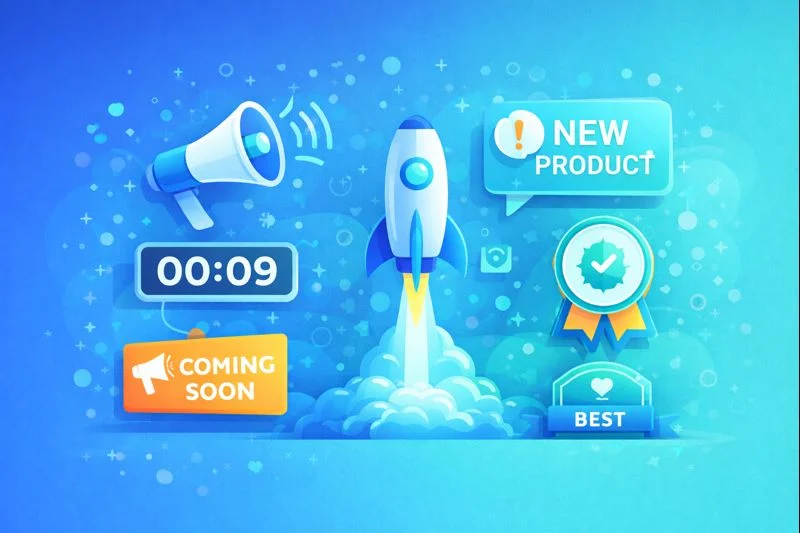
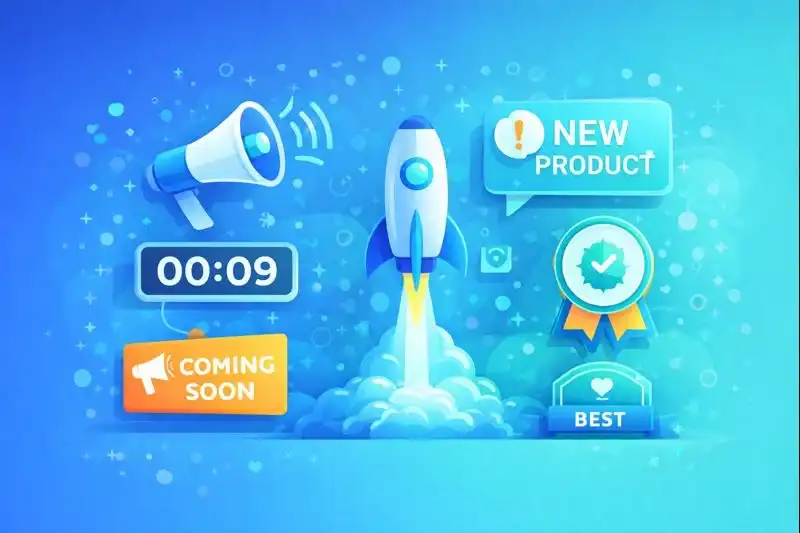
Product launches are critical revenue drivers: new product launches generate 20% of annual revenue for successful e-commerce stores. Research shows 52% of consumers want to be the first to know about new products, and stores with frequent new arrivals see 18% more repeat visits. Product launch emails have 25% higher open rates than standard promotional emails, and pre-launch teasers increase launch day sales by 40%. These statistics reveal a powerful truth—new product launches aren't just inventory updates; they're strategic marketing events that drive traffic, create excitement, and generate disproportionate revenue when executed correctly.
This article provides a comprehensive new product launch framework covering pre-launch preparation, email sequencing, social media amplification, and post-launch analysis to maximize every product introduction throughout 2025.
Pre-Launch Planning: 4-6 Weeks Before
Inventory & Operations Preparation:
Before announcing anything publicly, ensure operational readiness to fulfill demand:
-
Stock Quantity Decisions:
- Conservative Approach: Order 50-100 units for first batch (minimizes risk, creates scarcity)
- Aggressive Approach: Order 500+ units (economies of scale, prevents stockouts)
- Data-Driven: If similar products exist, forecast at 30-40% of comparable item's first-month sales
- Always have 25% buffer stock for reorders during viral spikes
-
Supplier & Production Timeline:
- Confirm delivery dates with 2-week cushion before public launch date
- For overseas suppliers (China, Vietnam), add 4-6 weeks for shipping/customs
- Arrange expedited shipping option if launch generates unexpected demand
- Have backup suppliers identified for fast restock
-
Product Photography & Content Creation:
- Hero Images: 5-7 professional shots (white background, lifestyle, detail close-ups, 360° view, size comparison)
- Video Content: 15-30 second Reels/TikToks showing product in use
- User-Generated Content Seeding: Send samples to 5-10 micro-influencers 3-4 weeks before launch for authentic content
- Packaging Unboxing: Film unboxing video (59% of consumers watch unboxing videos before purchasing)
-
Website Preparation:
- Create product page with "Coming Soon" status
- Write SEO-optimized product description (300-500 words)
- Set up "Notify Me" email capture form (converts 15-25% to launch day sales)
- Configure product in inventory management system
- Test checkout flow with test orders
-
Pricing Strategy:
- Research competitor pricing for similar products
- Calculate break-even at different price points considering all costs (product, shipping, marketing, platform fees)
- Decide pricing tier: Budget ($10-30), Mid ($30-75), Premium ($75-150), Luxury ($150+)
- Set launch pricing—typically full MSRP with optional time-limited "launch bonus" (free shipping, gift)
Email List Segmentation:
Prepare targeted email lists for sequential launch announcements:
- VIP Tier: Best customers (top 10% by LTV) get first access 48 hours early
- Loyalty Members: Program members get 24-hour early access
- Engaged Subscribers: Opened last 3 emails (highest conversion probability)
- Product Category Interest: Purchased similar items previously
- "Notify Me" List: Users who signed up for launch notification (hottest leads)
Festive Interface
Decorating your website’s pages can significantly improve the impression on visitors. Use a holiday theme in the design of the main page, banners, and even font styling:
- Banners and Main Screen: Add banners with New Year backgrounds, snowflakes, wreaths, or gift images to the main page. Use traditional colors — red, white, green, and gold — to create a festive atmosphere.
- Pop-ups: Add themed pop-ups announcing holiday sales or offers. This is especially helpful if your store provides special discounts on the first order or holiday promo codes.
- Snowfall or Animations: Use light animations like falling snowflakes or sparkles that appear when moving the mouse to add a touch of magic and appeal to the store.
Mobile Optimization
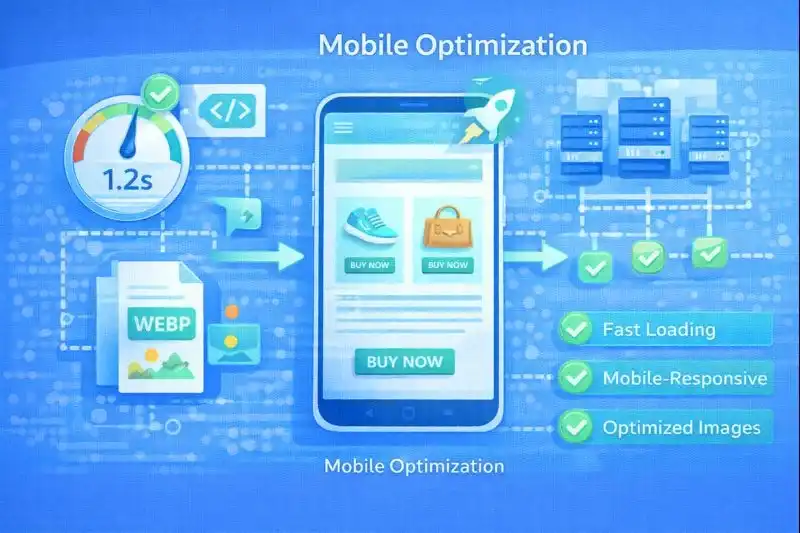
During the holiday season, many purchases are made from mobile devices, so your site must be well-optimized for smartphones and tablets. Ensure fast page loading to avoid customers leaving due to long waiting times. Here are some steps for optimization:
- Minimize Image Sizes: Use WebP or JPEG 2000 formats to reduce image size without sacrificing quality.
- Speed Up Page Load: Ensure fast page load times using caching, CDN servers, and CSS and JavaScript minification.
Special Sections
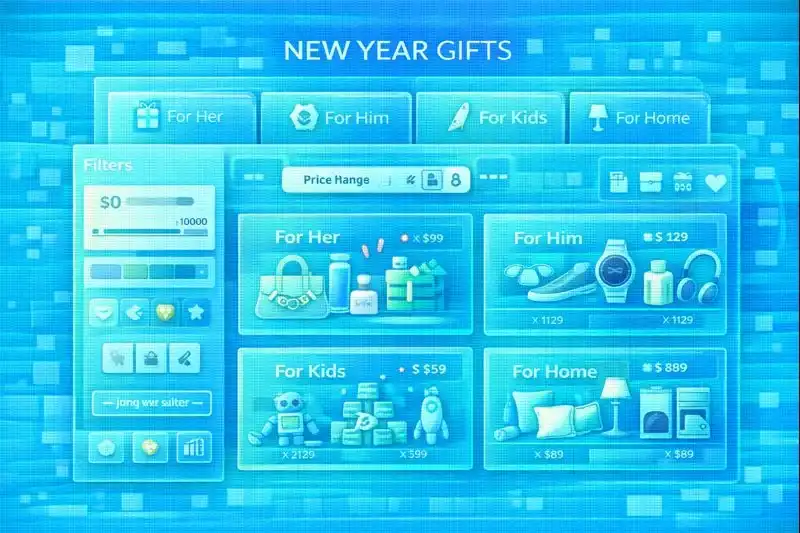
Easy navigation is essential to attracting customers during the holiday period. Add sections specifically dedicated to New Year products where shoppers can quickly find the right gifts:
- “New Year Gifts” Category: Place popular holiday items here that are frequently purchased during this time.
- Gift Themes: Create subcategories for different types of gifts, such as “For Her,” “For Him,” “For Kids,” and “For Home.”
- Interactive Filter: Add filters by price, category, color, and other criteria to make it easier for shoppers to navigate the range.
Holiday Promotions and Promo Codes
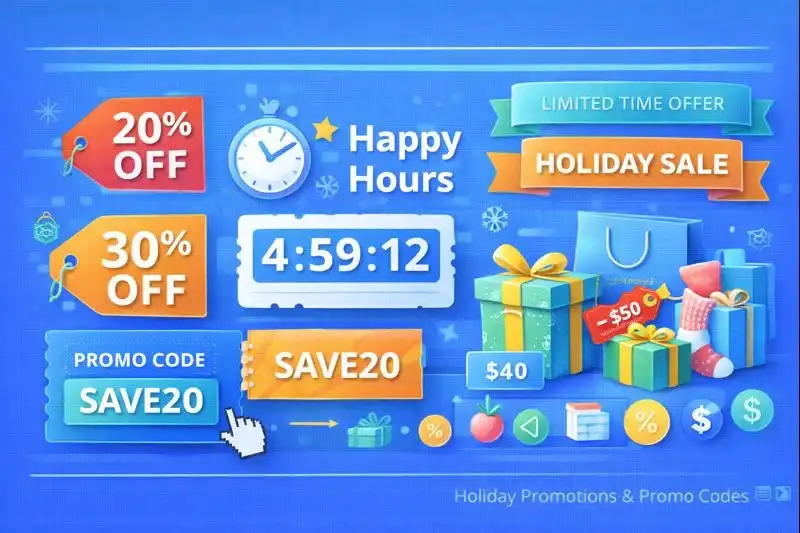
Promo codes and discounts can be powerful incentives to increase sales. Consider the following strategies:
- Discounts on Popular Products: Run promotions on the most in-demand categories, such as 20-30% off home goods or clothing.
- Happy Hours: Offer special prices at specific times to encourage shoppers to visit the site more often.
- Holiday Bundles and Sets: Create gift sets that can be purchased together at a discounted price.
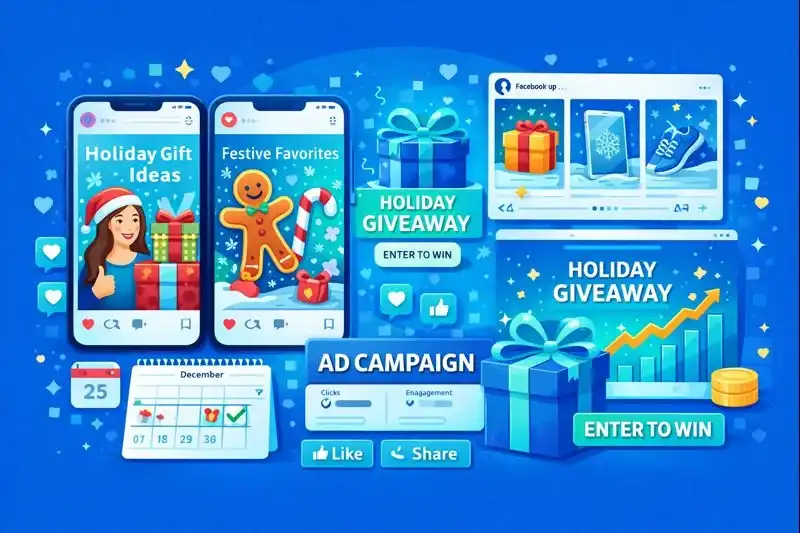
Social Media Marketing
Social media is an excellent tool to increase awareness of your store and attract customers during the holiday season. Consider these ideas:
- Thematic Posts and Stories: Create holiday posts and stories that showcase your products in a festive setting.
- Ad Campaigns: Launch ad campaigns for your holiday product categories and offers. Use various ad formats such as photos, videos, or carousels.
- Contests and Giveaways: Run contests to attract more people to your page and boost engagement on social media.
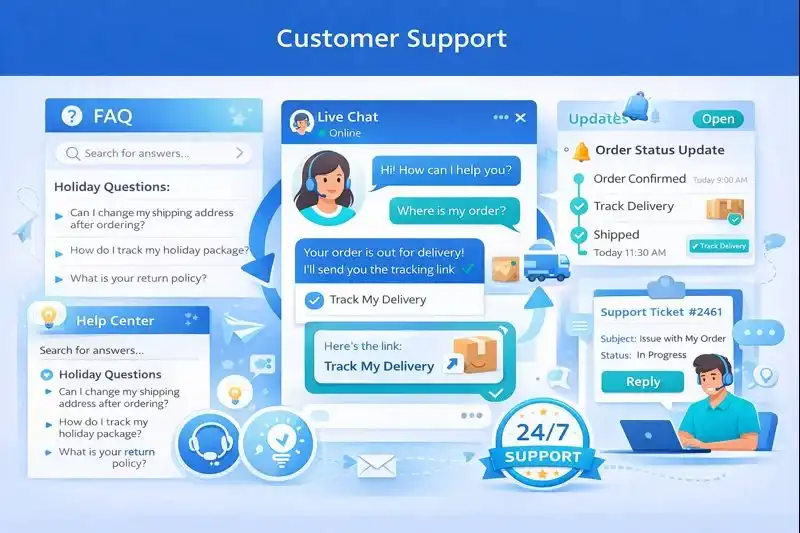
Customer Support Services
Customers expect high-quality service during the holiday period. Prepare your support team to handle requests quickly and effectively:
- FAQs: Create a page with frequently asked questions about holiday shopping, including delivery, returns, and holiday promo codes.
- Support Chat: Provide access to a support chat so that customers can quickly get answers to their questions.
- Delivery Notifications: Keep customers informed about order status and shipment updates.
Email Launch Sequence: 7-Day Framework
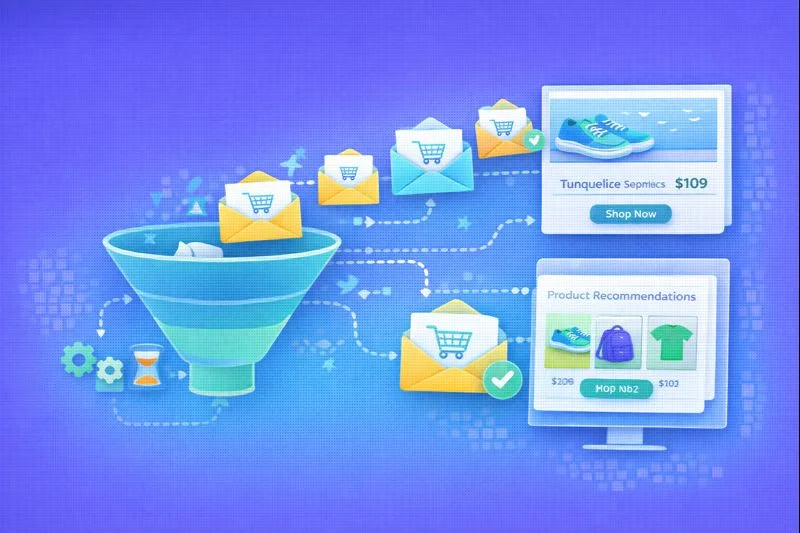
Email drives the highest ROI for product launches—use this proven 7-day sequence:
Day -7 (Week Before Launch): VIP Teaser
- Audience: Top 10% customers by LTV + loyalty members
- Subject: "👀 You're the first to see this..."
- Content: Sneak peek image (partial product shot), brief description, launch date announcement, exclusive early access offer
- CTA: "Set Your Reminder" or "Get Early Access"
- Expected Open Rate: 35-45% (VIP lists outperform by 15%)
Day -3 (Three Days Before): Pre-Order Announcement
- Audience: Entire email list
- Subject: "🚀 Launching in 72 Hours: [Product Name]"
- Content: Full product reveal with images/video, key features/benefits, pricing, pre-order option with incentive ("Pre-order now, get 10% off + free shipping")
- CTA: "Pre-Order Now" or "Reserve Yours"
- Expected Open Rate: 25-30%
Day 0 (Launch Day): Full Launch
- Audience: Entire list (stagger: VIPs at 8am, general list at 10am)
- Subject: "✨ IT'S HERE: [Product Name] is now available"
- Content: Professional product photos, customer testimonials (if beta tested), social proof ("500+ pre-orders"), launch offer ("48-hour launch special: Free shipping + gift"), urgency element ("Limited first batch")
- CTA: "Shop Now"
- Expected Open Rate: 30-35%
Day +2 (Two Days After Launch): Social Proof
- Audience: Opens but no purchase + non-openers
- Subject: "⭐ Why everyone's talking about [Product Name]"
- Content: Early customer reviews, UGC photos, "Trending" or "Selling Fast" messaging, FAQ addressing common questions
- CTA: "See Why They Love It"
- Expected Open Rate: 18-22%
Day +5 (Five Days After Launch): Last Chance
- Audience: Engaged subscribers who haven't purchased
- Subject: "⏰ Last Chance: Launch offer ends tonight"
- Content: Scarcity messaging ("Only 47 left in stock"), final hours for launch discount, customer testimonials, "Don't miss out" psychology
- CTA: "Grab Yours Before It's Gone"
- Expected Open Rate: 20-25%
Day +10 (Post-Launch Follow-up): Back in Stock
- Audience: Anyone who clicked but didn't buy + "Notify Me" list who missed launch
- Subject: "📦 Good news: [Product Name] back in stock"
- Content: Restock announcement, "Sold out in 48 hours" social proof, new customer photos/reviews
- CTA: "Shop the Restock"
- Expected Open Rate: 22-28%
Email Design Best Practices:
- Mobile-First: 67% of email opens are mobile—use single column, large fonts (16px+ body, 24px+ headers)
- Visual Hierarchy: Hero image at top, clear headline, 1-2 paragraphs max, prominent CTA button
- CTA Placement: Above the fold + at bottom (test "Add to Cart" vs "Shop Now")
- Personalization: Use first name, reference past purchases ("Since you loved [Previous Product]...")
- A/B Testing: Test subject lines on 10% of list, send winner to remaining 90%
Launch Day Execution Checklist
Morning of Launch (6-8 AM):
☐ Final inventory count verified in system ☐ Product page live and tested (add to cart, checkout flow) ☐ Homepage hero banner updated with launch announcement ☐ Pop-up/exit intent configured with launch offer ☐ Email #1 sent to VIP tier (8am) ☐ Social media posts scheduled (Instagram feed, Stories, TikTok) ☐ Customer service briefed on product FAQs
Mid-Morning (10 AM):
☐ Email #2 sent to general list (10am launch blast) ☐ Instagram Stories going live every 2 hours (product demo, unboxing, countdown to next batch) ☐ Paid ads turned on (Facebook, Instagram, Google Shopping) ☐ Influencer posts going live (coordinate timing in advance)
Afternoon (2-4 PM):
☐ Monitor inventory levels—prepare "low stock" notifications if selling fast ☐ Respond to all comments/DMs on social media within 1 hour ☐ Check website analytics: conversion rate, cart abandonment, traffic sources ☐ If slow: Send SMS blast to VIP list, boost social posts with ad spend
Evening (6-8 PM):
☐ Post "Launch day recap" Story showing sales, customer photos, excitement ☐ Respond to all customer emails/questions within 4 hours ☐ Review first-day sales vs forecast (adjust marketing if underperforming) ☐ Schedule next-day "Trending Now" email if strong performance
Common Launch Day Problems & Fixes:
- Website Crashes: Use CDN (Cloudflare), stress-test before launch, have developer on standby
- Stockout in First 6 Hours: Communicate transparently ("Sold out! Restocking in 5 days"), capture "Notify Me" emails
- Slow Sales: Increase ad spend 50%, send unscheduled email highlighting scarcity/reviews, reach out to affiliates
- High Cart Abandonment (70%+): Send abandoned cart email within 1 hour with launch incentive, check if shipping costs surprising customers
Post-Launch Analysis & Optimization
Week 1: Immediate Metrics to Track
- Total Units Sold: Compare to forecast (±20% is normal variance)
- Revenue Generated: Actual vs projected
- Email Performance: Open rates, click rates, conversion by segment
- Traffic Sources: Which channel drove most sales? (Email, Instagram, Facebook ads, Google, influencers)
- Customer Acquisition Cost (CAC): Total marketing spend ÷ new customers acquired
- Profit Margin: After all costs (product, shipping, marketing, returns)
Month 1: Long-Term Indicators
- Repeat Purchase Rate: How many launch buyers return for second purchase within 30 days?
- Customer Lifetime Value: Are launch customers higher/lower LTV than average?
- Product Return Rate: Quality issues? Size/fit problems?
- Organic Search Traffic: Is product ranking for target keywords?
- Social Media Engagement: Posts featuring new product vs evergreen content
Optimization Actions:
- If Underselling: Increase ad budget 30-50%, partner with more influencers, offer limited-time discount (10-15% off)
- If Overselling (Stockouts): Fast-track restock, raise price 10-20% to manage demand, start waitlist for next batch
- If High Returns: Address quality/sizing issues, improve product page descriptions/images
- If Low Engagement: Test new product photos, adjust messaging, target different audience segments
Blog and Content
Additional content can help your store become a source of inspiration for customers. Add helpful tips, articles, or product reviews related to the New Year holidays:
- Gift Ideas: Publish posts with gift ideas for different types of buyers.
- Style Recommendations: Articles that offer gift wrapping options or decor advice.
- Recipes for Holiday Meals or Drinks: Add a section with holiday-related tips or recipes for traditional dishes.
Frequently Asked Questions
How often should I add new products to my store?
The optimal frequency depends on your category, but general benchmarks are: Fashion/Apparel: Weekly or bi-weekly (fast-changing trends demand constant freshness). Home Goods: Monthly (slower purchase cycles, seasonal relevance). Electronics/Tech: Quarterly (product development cycles). Beauty/Cosmetics: Monthly (balance between novelty and inventory management). Food/Consumables: Bi-weekly to monthly (seasonal flavors, limited editions). The data shows stores adding new products 2-4 times per month see 18% more repeat visits than those updating quarterly. However, quality beats quantity—launching one well-marketed product beats dumping 10 with no promotion. Best practice: Maintain a product launch calendar tied to seasons (see seasonal calendar in related articles). Plan 6-12 major launches annually with full marketing support, plus 12-24 minor additions (colorways, sizes, variations) with lighter promotion. This keeps inventory fresh without overwhelming customers or diluting marketing impact.
What's the best way to announce new arrivals?
Use a multi-channel sequenced approach for maximum impact: 7-10 days before launch: Teaser email to VIP/loyalty customers with sneak peek images ("Coming Soon"). Social media teaser posts building anticipation. 3-5 days before: Pre-order availability for email subscribers (early access creates exclusivity). Influencer/affiliate seeding (send products for unboxing/review content). Launch day: Full email blast to entire list with product details, pricing, limited-time launch offer. Website homepage takeover (hero banner, pop-up). Social media blitz (Instagram feed post, Stories, Reels showing product in use). Day 2-3: "Trending" or "Selling Fast" email to create FOMO. Customer testimonials/early reviews highlighted. Day 7: Final push email: "Last chance for launch discount" or "Limited stock remaining." Post-launch follow-up thanking early adopters. Channel effectiveness: Email delivers highest ROI (25% higher open rates for launch announcements), Instagram/TikTok drive brand awareness and virality, SMS creates urgency (use sparingly—save for biggest launches).
Should I offer discounts on new products?
Generally no—but strategic exceptions exist. New products at full price signal value and exclusivity; immediate discounting trains customers to wait for sales and devalues the product before it establishes market presence. When to launch at full price: Innovative/unique products with no direct competition, premium positioning brands, products with high perceived value, limited editions/exclusives. When to consider launch discounts: Crowded competitive categories where differentiation is price-based, first product in a new category (need trial users), products replacing discontinued items (smooth transition). Better alternatives to discounts: Early access for VIPs (exclusive without being discounted), Free shipping for launch period, Gift with purchase (bundle with related item), Limited quantities at launch price, then increase (scarcity without discount). If you must discount, use "Launch Special: 15% off first 48 hours" format—short window creates urgency while preserving long-term pricing. Data shows products launched at full price with value-add offers (free shipping, gift) maintain 25% higher profit margins over lifetime than those launched with percentage discounts.
How do I create hype for product launches?
Build anticipation through strategic information release: 4-6 weeks before: Subtle teasers on social media (partial product images, cryptic captions). Behind-the-scenes content showing development/creation process. 3-4 weeks: Product name reveal with teaser campaign hashtag. Influencer partnerships seeded (send early samples for content creation). Email to VIPs: "Be the first to know" signup for exclusive early access. 2 weeks: Full product reveal with professional photos/videos. Pre-order announcement for email subscribers only. Social media countdown begins. 1 week: Customer testimonials from beta testers. Email blast with launch date, pricing, special launch offer details. Retargeting ads to website visitors and email list. Launch day: Homepage takeover, email blast, social media blitz, influencer posts go live. Tactics that amplify hype: Limited quantities ("Only 500 units in first batch"), Countdown timers on product pages, User-generated content campaigns (#ShowUsYourStyle), Exclusive colorways/versions for early buyers, Live unboxing events on Instagram/TikTok. Example: Fashion Nova generates massive hype by releasing new items weekly in limited quantities at specific times (6pm PST Wednesdays)—customers know to check then, creating consistent traffic spikes.
When is the best time to launch new products?
Timing significantly impacts launch success. Best days: Tuesday-Thursday (avoid Monday inbox overload and Friday weekend distraction). Best times: 10 AM or 2 PM for email sends (highest open rates). Avoid: Major holidays (attention elsewhere), competitor launch dates, end of month (low discretionary spending). Seasonal strategy: January: New Year/resolution products (fitness, organization, self-improvement). February: Valentine's gifts, spring preview items. March-April: Spring fashion, outdoor gear, Easter. May-June: Summer products, Father's Day, graduation gifts. July-August: Back-to-school (biggest non-holiday shopping period). September-October: Fall fashion, Halloween, holiday previews. November-December: Final holiday gifts, early Q1 2025 launches. Day-of-week performance: Tuesday launches see 23% higher engagement than Friday launches. Quarter timing: Q3 (July-Sept) sees lowest competition for launch attention, making it ideal for building awareness before Q4 holiday rush. Align launches with your seasonal calendar (see related article) to ride demand waves rather than fight them.
Related Articles
Build a comprehensive product launch strategy with these tactical guides:
- Holiday Email Campaigns That Convert - Apply email sequencing strategies to product launches for 25% higher open rates
- Seasonal Sales Strategy - Time your product launches with the 2025 seasonal calendar for maximum impact
- Social Media Marketing Guide - Amplify product launches across Instagram, TikTok, and Facebook for viral reach
Conclusion
Product launches are revenue multipliers when executed strategically. With new products generating 20% of annual revenue, 52% of consumers wanting early notification, and launch emails achieving 25% higher open rates, the opportunity is clear—systematic product launches drive disproportionate traffic, engagement, and sales. Stores launching new products 2-4 times monthly see 18% more repeat visits, turning product refreshes into customer retention tools.
The winning formula combines strategic timing (Tuesday-Thursday launches, seasonal alignment with demand curves), multi-channel sequencing (7-10 day pre-launch teasers, launch day blitz, post-launch FOMO), and value-driven positioning (full-price launches with early access perks, not immediate discounts). Build anticipation through limited quantities, countdown timers, influencer seeding, and VIP early access that creates exclusivity without devaluing the product.
Start implementing today: create a 2025 product launch calendar aligned with seasonal peaks, build email templates for 7-day launch sequences, identify 3-5 micro-influencers for product seeding partnerships, and track launch performance separately from evergreen inventory. The stores dominating e-commerce don't just add inventory—they orchestrate product launches as strategic marketing events that generate excitement, traffic, and sales momentum that carries beyond launch week.