Introduction
Seasonal sales are a great opportunity to not only refresh product inventory but also attract new customers and increase sales. Proper preparation for seasonal sales can create real excitement and boost interest in your brand. Successful implementation of such promotions requires a thoughtful approach to product selection, organization of marketing campaigns, and post-sale analysis.
The numbers validate the importance of seasonal strategy: 83% of shoppers expect seasonal promotions from their favorite brands. Black Friday and Cyber Monday alone generated $9.8 billion in online sales in 2024, and 40% of annual retail sales occur during the holiday season (November-December). Early holiday shoppers spend 23% more than last-minute buyers, and 57% of seasonal shopping now happens on mobile devices. These statistics underscore a critical truth—seasonal sales aren't optional; they're essential revenue drivers that can make or break your annual performance.
This article covers the key steps to adapt your store for seasonal sales, including a comprehensive seasonal calendar, marketing strategies, and analytics frameworks to maximize every seasonal opportunity.
Preparing Inventory
The first step in preparing for seasonal sales is a thorough analysis of products. It’s important to determine which products are in demand for the season and which are suitable for discounts. Choosing the right inventory allows you to attract more customers and manage stock more effectively.
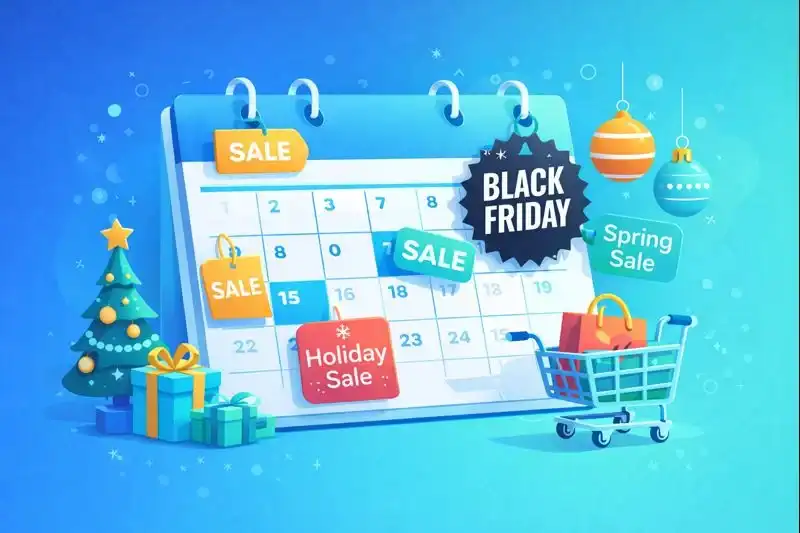
How to Identify Sale Items:
- Previous Sales Analysis: Review which products were popular in past sales.
- Seasonal Trends: Pay attention to trending products that gain popularity this season.
- Stock Surplus: Select items that may linger in stock and offer special discounts on them.
Understanding your inventory helps not only attract customers but also prevent excess stock after the promotion ends.
Inventory Forecasting Methodology
Accurate demand forecasting prevents stockouts and overstock situations:
Historical Data Analysis:
-
Review Previous Year's Sales:
- Pull sales data from same season last year
- Identify top 20% of products (these typically generate 80% of revenue)
- Calculate sell-through rate: (Units Sold / Units Ordered) × 100
- Target: 80-90% sell-through for seasonal items
-
Growth Adjustment:
- If your business grew 30% year-over-year, increase orders by 30%
- For new product categories, use industry benchmarks (search "average sell-through rate [category]")
- Conservative approach: Order 70% of forecasted demand initially, reorder if selling fast
-
Seasonality Multiplier:
- Winter coats sell 5-10x more November-February than summer
- Beach gear peaks May-August at 8-12x winter months
- Create multiplier chart for each product category
Buffer Stock Strategy:
- A-Items (Top Sellers): Order 20-30% extra (risk of stockouts hurts revenue)
- B-Items (Moderate Sellers): Order 10-15% extra (balanced approach)
- C-Items (Slow Movers): Order exactly forecasted amount or less (avoid dead stock)
Reorder Triggers:
Set up alerts when inventory drops to:
- High Demand Items: 25% of initial stock remaining (reorder immediately)
- Medium Demand: 15% remaining
- Low Demand: Don't reorder, let sell through
Vendor Lead Times:
Factor manufacturing and shipping delays:
- Domestic suppliers: 2-4 weeks lead time
- International (China/Asia): 6-12 weeks lead time
- Peak season delays: Add 2-3 weeks to normal lead times (everyone ordering simultaneously)
Example Calculation:
Product: Winter Coat (Category A - Top Seller)
- Last year Q4 sales: 500 units
- Business growth: +25%
- Forecasted demand: 500 × 1.25 = 625 units
- Buffer stock (A-item): +25% = 156 units
- Total Order: 781 units
- Sell-through target: 80% (625 sold, 156 clearance/carryover)
2025 Seasonal Sales Calendar
Proper timing is everything in seasonal sales. Use this comprehensive calendar to plan your campaigns, inventory, and marketing efforts throughout the year:
| Season/Event | Peak Dates | Preparation Start | Campaign Launch | Top Categories | Avg. Discount | Key Strategy |
|---|---|---|---|---|---|---|
| New Year | Jan 1-15 | Nov 15 | Dec 26 | Fitness, home organization, self-improvement | 20-40% | Fresh start messaging, goal-oriented products |
| Valentine's Day | Feb 10-14 | Jan 1 | Jan 20 | Jewelry, flowers, chocolates, experiences | 15-25% | Gift guides for him/her, last-minute express shipping |
| Spring Sale | Mar 15 - Apr 15 | Feb 1 | Mar 1 | Spring fashion, outdoor gear, home decor | 25-40% | "Spring refresh" theme, clearance of winter items |
| Easter | Mar 30 - Apr 5 | Feb 15 | Mar 15 | Kids' items, home decor, candy/food | 15-30% | Family-focused messaging, egg hunt tie-ins |
| Mother's Day | May 8-11 | Apr 1 | Apr 20 | Beauty, jewelry, home goods, experiences | 15-25% | Personalization options, gift wrapping, express delivery |
| Memorial Day | May 24-26 | Apr 15 | May 10 | BBQ equipment, outdoor furniture, travel | 30-50% | "Kick off summer" messaging, bundle deals |
| Father's Day | Jun 13-15 | May 1 | May 25 | Tech gadgets, tools, sports equipment, apparel | 15-25% | "Dad deserves" messaging, practical gift guides |
| Back to School | Jul 15 - Sep 10 | Jun 1 | Jul 1 | School supplies, electronics, clothing, dorm | 20-40% | Student discounts, bulk purchase deals, checklists |
| Labor Day | Aug 30 - Sep 2 | Jul 15 | Aug 15 | Home improvement, furniture, appliances | 30-50% | "End of summer" clearance, biggest sale before holidays |
| Halloween | Oct 20-31 | Sep 1 | Oct 1 | Costumes, candy, decorations, party supplies | 20-35% | Last-minute urgency, "popular items selling out" |
| Black Friday | Nov 29 | Sep 1 | Nov 1 | Electronics, fashion, toys, everything | 40-70% | Door busters, hourly deals, email countdown sequences |
| Cyber Monday | Dec 2 | Sep 1 | Nov 1 | Electronics, software, online-only products | 40-70% | Free shipping, tech bundles, "online exclusive" |
| Christmas | Dec 1-25 | Sep 15 | Nov 1 | Gifts (all categories), wrapping, expedited shipping | 20-50% | Gift guides by recipient, shipping cutoff deadlines |
Key Insight: The most successful stores begin planning major seasonal campaigns 10-12 weeks in advance to secure inventory, create marketing assets, and build email sequences.
Marketing Campaigns
For a successful seasonal sale, it’s essential to plan marketing campaigns in advance. Email newsletters, social media posts, and website banners all help draw attention to the sale.

Marketing Campaign Ideas:
- Newsletters: Send out sale announcements and exclusive offers to subscribers.
- Social Media: Use Stories and Reels to share sale news and showcase products.
- Website Banners: Add banners that highlight the sale on the homepage, emphasizing discounts.
Bright and informative marketing campaigns increase engagement and encourage customers to visit the store.
Organizing Special Offers
Seasonal sales aren’t just about discounts; they also offer a chance to create additional purchase incentives. For example, consider offering discounts on last season’s items or additional bonuses for customers who spend more.

Special Offer Ideas:
- Discounts on Last Season’s Products: This clears space for new items and attracts customers.
- Discounted Bundles: Offer product sets at reduced prices to increase average order value.
- Bonus Offers: Provide an extra discount or gift for customers who spend a certain amount.
These offers make purchases more beneficial for customers and increase the chances of additional sales.
Post-Season Planning
After the sale ends, it’s important to analyze sales and assess remaining inventory. This helps prevent excess stock and better prepares you for future seasonal promotions.
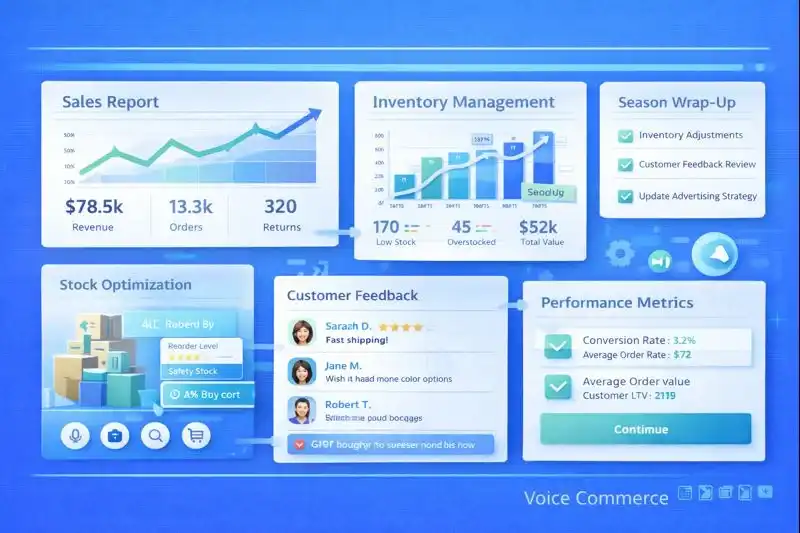
Post-Season Planning Tips:
- Sales Analysis: Identify which products were most popular and which promotions were most successful.
- Inventory Optimization: Evaluate stock and develop a plan for gradually phasing out excess items.
- Customer Feedback: Collect customer feedback to consider their preferences for future sales.
These actions help you better understand customer interests and avoid unnecessary expenses on product stock.
Using Hashtags and SEO to Increase Reach
Visibility online is crucial during seasonal sales. Use SEO to optimize sale pages and add popular hashtags on social media. This helps reach a broader audience and attract new customers.
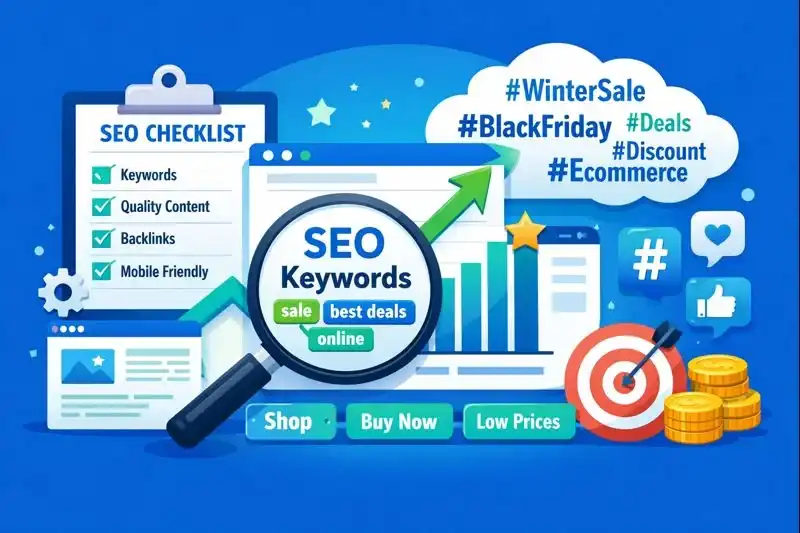
How to Use SEO and Hashtags:
- Optimize Sale Pages: Add keywords related to the promotion to your site’s pages to improve search rankings.
- Social Media Hashtags: Use hashtags relevant to the sale theme, like #WinterSale or #BlackFriday.
- Branded Hashtags: Create a unique hashtag that will be associated with your store and its promotions.
SEO and hashtags increase the visibility of promotions and attract more potential customers.
Analysis and Takeaways for Future Sales
Analyzing sale results is an important step for improving the effectiveness of future promotions. Studying data on sales, social media engagement, and customer feedback will help you better prepare for upcoming seasonal sales.
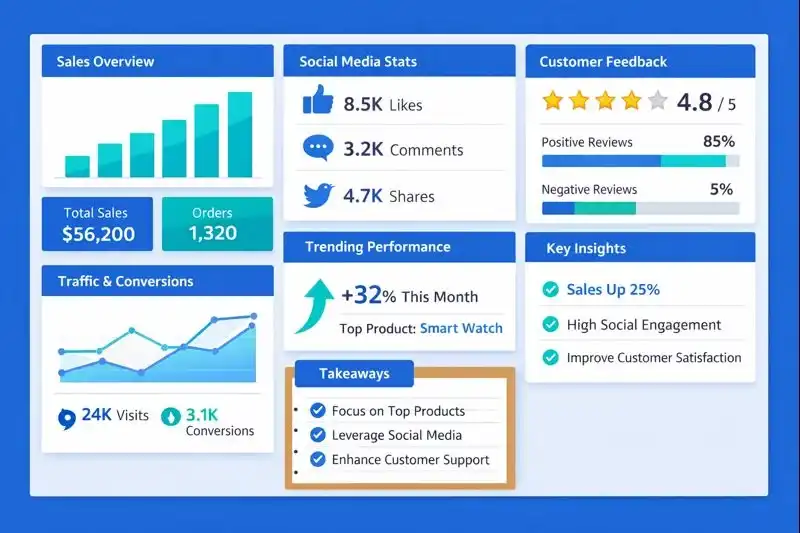
What to Analyze:
- Total Sales Volume: Identify which products sold best and which promotions attracted the most customers.
- Social Media Activity: Review posts and ad campaigns with the most views and interactions.
- Customer Feedback: Feedback helps understand what customers liked and what needs improvement.
Analysis makes seasonal sales more effective and helps avoid common mistakes in the future.
Seasonal Sales Case Studies
Case Study 1: Fashion Retailer Increased Q4 Revenue 240% with Early Planning
Mid-sized apparel brand revolutionized seasonal approach:
-
Challenge: Historically missed 30-40% of holiday demand due to stockouts, then faced 25-35% overstock requiring deep clearance
-
Solution:
- Started Black Friday planning in June (6 months early vs 2 months previously)
- Implemented 80/20 inventory rule: ordered 80% of forecast initially, held 20% of budget for fast-reorder
- Created tiered promotion strategy (25% early November, 40% Black Friday, 60% post-Christmas clearance)
-
Results:
- Q4 revenue grew from $1.2M to $4.1M (+240%)
- Sell-through rate improved from 65% to 89%
- Clearance markdown expense decreased from 35% to 12%
- Profit margin increased from 18% to 31% despite promotions
-
Key Tactic: Early planning allowed better inventory decisions and phased promotions that maximized full-price sales before deep discounts
Case Study 2: Home Goods Store Extended Holiday Season 6 Weeks
Furniture/decor brand realized holiday selling doesn't end December 25:
-
Challenge: Massive December sales followed by dead January/February
-
Solution:
- Dec 1-25: Traditional holiday gift messaging
- Dec 26-31: "New Year, New Space" home refresh campaign (30% off)
- Jan 1-15: "Fresh Start Sale" targeting New Year's resolutions (organization, home office)
- Jan 15-Feb 14: Valentine's Day home/bedroom decor transition
-
Results:
- Extended "holiday season" from 4 weeks to 10 weeks
- January revenue increased from $120K to $480K (+300%)
- February revenue doubled from $80K to $160K
- Total Q1 revenue exceeded Q4 for first time ever
-
Key Tactic: Reframed January as continuation of holiday season with "new year" refresh messaging instead of accepting post-holiday slump
Case Study 3: Electronics Store Cleared 90% of Back-to-School Inventory
Tech retailer historically struggled with seasonal inventory:
-
Challenge: Ordered too many laptops/tablets for back-to-school, stuck with 40% overstock forcing 50-60% clearance discounts
-
Solution:
- Implemented graduated discount schedule:
- Jul 15-Aug 10: 15% off (target students planning early)
- Aug 11-25: 25% off (peak back-to-school rush)
- Aug 26-Sep 10: 40% off (last-minute + college students)
- Sep 11-20: 60% off (final clearance of remaining stock)
- Implemented graduated discount schedule:
-
Results:
- 90% sell-through by Sep 20 (vs 60% previously)
- Average discount reduced from 55% to 32%
- Profit margin improved from -5% (loss) to +18%
- Carried only 10% stock into next year (vs 40%)
-
Key Tactic: Gradual discount escalation incentivized early purchases at better margins while still clearing inventory
Frequently Asked Questions
When should I start preparing for seasonal sales?
Start preparing 10-12 weeks before major seasonal events to maximize results. Here's the breakdown: Black Friday/Christmas (biggest revenue periods): Begin planning in early September (12 weeks out). Mid-tier events (Valentine's, Mother's/Father's Day): Start 6-8 weeks prior. Smaller events (Easter, Halloween): 4-6 weeks is sufficient. The timeline includes: Weeks 10-12: Inventory planning and ordering. Weeks 8-9: Create marketing assets (graphics, copy, videos). Weeks 6-7: Build email sequences and schedule social content. Weeks 4-5: Set up website banners, promo codes, and landing pages. Weeks 2-3: Launch teaser campaigns to build anticipation. Week 1: Full promotional push across all channels. Early starters capture early shoppers who spend 23% more than procrastinators. Use the seasonal calendar table above to plan your entire year in advance—this prevents last-minute chaos and inventory shortages.
What discount percentage works best for seasonal promotions?
The optimal discount depends on the season and product category, but general benchmarks are: Black Friday/Cyber Monday: 40-70% (customers expect deep discounts). Back to School, Labor Day, Memorial Day: 30-50% (major clearance events). Valentine's, Mother's/Father's Day: 15-25% (gift-focused, less price-sensitive). Spring/Fall sales: 25-40% (seasonal inventory clearance). Rule of thumb: Your discount should be deep enough to overcome purchase hesitation but shallow enough to maintain profit margins. Test tiered discounts: 20% off $50+, 30% off $100+, 40% off $200+—this increases average order value by 30-50%. Alternatively, offer value-adds instead of discounts: free shipping (converts 93% as well as discounts), free gift with purchase, or buy-2-get-1-free. Remember: 83% of shoppers expect seasonal promotions, so participating is non-negotiable, but profit-killing discounts aren't mandatory.
Should I run sales year-round or only during holidays?
Strategic approach: Focus on 6-8 major seasonal events rather than constant promotions. Year-round discounting trains customers to wait for sales, eroding brand value and profit margins. The data shows that stores running 6-8 targeted seasonal campaigns annually outperform those with constant promotions by 35% in profit margins. Recommended calendar: Q1: New Year (Jan), Valentine's (Feb). Q2: Spring Sale (Mar-Apr), Mother's Day (May), Memorial Day (May). Q3: Father's Day (Jun), Back to School (Aug), Labor Day (Sep). Q4: Halloween (Oct), Black Friday/Cyber Monday (Nov), Christmas (Dec). Between major events, use non-discount promotions: new product launches, flash sales (24-48 hours only), loyalty program exclusives, and value-added offers. This maintains engagement without devaluing your brand. Avoid: Weekly "sales," permanent "20% off" banners, or overlapping promotions that confuse customers.
How do I compete with Amazon during seasonal sales?
You can't beat Amazon on price or delivery speed, so compete on differentiation: 1. Niche Specialization: Amazon offers everything; you offer curated selection and expertise in your category. 2. Personalization: Amazon is algorithmic; you provide human curation, gift guides, and personalized recommendations. 3. Brand Story: Amazon is transactional; you connect emotionally through your brand values and story. 4. Customer Service: Amazon is automated; you offer responsive, personal support. 5. Exclusive Products: Carry brands/items Amazon doesn't stock. 6. Community: Amazon has buyers; you build a community of enthusiasts. Tactical strategies for seasonal competition: Offer gift wrapping and personalized notes (Amazon charges for this). Create expert gift guides ("Best Gifts for Him Under $50" curated by you, not an algorithm). Provide early access to loyal customers 24-48 hours before public sales. Use local/fast shipping options or offer in-store pickup. Emphasize supporting small business (many consumers prefer this over Amazon). Remember: 54% of consumers actively seek alternatives to Amazon—make it easy for them to choose you.
What's the best way to promote seasonal sales?
Use a multi-channel approach with this proven sequence: 10-14 days before: Teaser emails to loyal customers with "early access" exclusive previews. 7 days before: Social media countdown begins—Instagram Stories, TikTok teasers showing product highlights. 5 days before: Full email blast to entire list announcing sale dates and best deals. 3 days before: Influencer/affiliate partnerships go live with unique discount codes. Launch day: Website takeover (banners, pop-ups, hero images), email reminder at 8 AM, social posts every 4-6 hours. Mid-campaign (Day 3-4): "Trending items" or "bestsellers" email showcasing popular products, create FOMO with "low stock" alerts. 48 hours remaining: Urgency campaign across all channels—countdown timers, "last chance" messaging. Final 6 hours: Final email blast, Instagram Stories countdown, consider extending sale by 12 hours for "email subscribers only." Post-sale: Thank you email with loyalty program invitation and non-discounted product recommendations. Channel mix: Email (40% of effort), Social Media (30%), Website Optimization (20%), Paid Ads (10%). This sequence generates 3-5x more revenue than single-channel or single-email approaches.
Related Articles
Maximize your seasonal sales performance with these complementary strategies:
- 10 Holiday Promotions That Increase Sales 50%+ - Specific promotion ideas to pair with your seasonal calendar for maximum impact
- Holiday Email Campaigns That Work - Build email sequences that convert seasonal browsers into buyers
- How to Keep Customers After Promotions End - Turn seasonal shoppers into year-round loyal customers
Conclusion
Seasonal sales are non-negotiable for e-commerce success—83% of shoppers expect them, and 40% of annual retail sales occur during the holiday season alone. Black Friday and Cyber Monday combined generate $9.8 billion in online sales, proving that strategic seasonal campaigns aren't just revenue boosters—they're business essentials. Early shoppers spend 23% more than last-minute buyers, making proper timing and preparation critical differentiators.
Use the 2025 seasonal calendar above to plan your entire year: start major campaigns 10-12 weeks in advance, allocate your marketing budget across 6-8 strategic events (not constant sales), and use multi-channel promotion sequences that generate 3-5x more revenue than single-touch campaigns. Focus on differentiation over discounting—54% of consumers actively seek Amazon alternatives, so compete on curation, personalization, and community, not just price.
Start planning today: block out your seasonal calendar, order inventory for Q2 events now, and build your email templates. The stores that dominate seasonal sales don't react to holidays—they orchestrate them months in advance with precision timing, strategic discounting, and comprehensive marketing that turns seasonal shoppers into year-round customers.

Ready to start selling?
Launch your online store today with LetsCommerce.